
Running a construction business isn’t for the faint-hearted. Your money never seems to move in a straight line.
You buy materials one week and pay subcontractors the next, and then you’re stuck waiting for stage payments at month’s end. And sometimes, you’re still waiting 45 days for that cash to actually show up.
Throw in retentions that sit on the books for a year, or variations that flip the scope halfway through, and tracking profit gets a lot trickier than in most other trades.
Construction accounting tracks income, costs, and profit project by project, not just across your whole business. It pulls together job costing, staged billing, subcontractor payments, and reporting for contracts that might last months or even years.
This approach matters more than you’d think. Two jobs might look similar in value but behave completely differently in profit.
If you don’t do proper project accounting, you might not spot a loss-maker until you’ve sent the final invoice. That can be a costly surprise.
On top of that, construction businesses in the UK have to deal with rules that other industries don’t think the Construction Industry Scheme, the VAT domestic reverse charge, and revenue recognition under FRS 102.
This guide walks through how construction finance works in practice, what changed in 2026, and how to keep your records sharp enough to actually make decisions from.
Key Takeaways
- Construction accounting focuses on projects, and job costing tells you which contracts truly make money.
- CIS registration, subcontractor verification, and monthly returns are compulsory for contractors, with nil returns and new HMRC fraud prevention rules from April 2026.
- The VAT domestic reverse charge shifts VAT accounting from the subcontractor to the contractor on CIS-regulated B2B supplies.
- Cash flow kills more construction businesses than anything else, so invoice in stages, take deposits, and chase late payments early.
- Specialist cloud software and accountants who know construction help you stay compliant on CIS, VAT, and Making Tax Digital.
What is construction accounting?
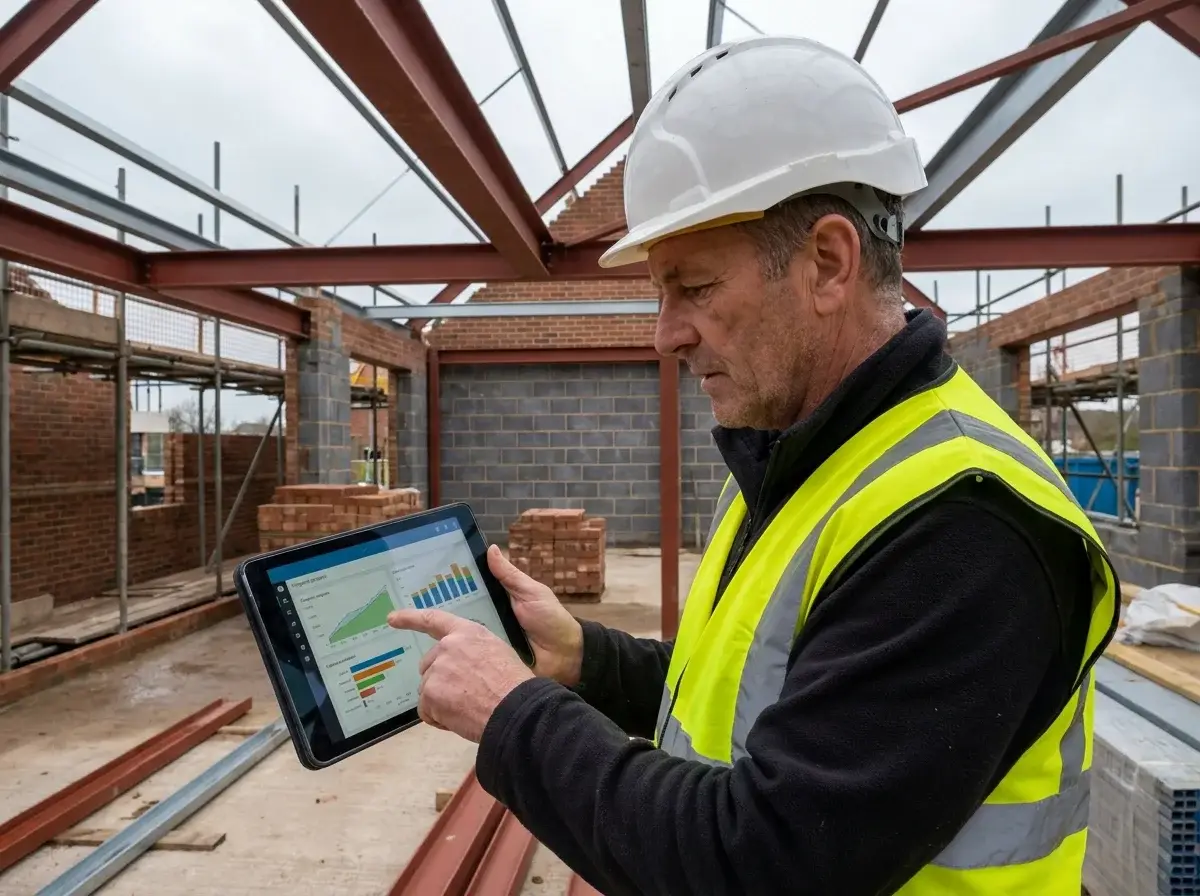
(For Illustrative Purposes Only)
Construction accounting tracks income, costs, and profit for each building project. It covers job costing, staged billing, subcontractor payments, and industry-specific tax rules like the Construction Industry Scheme.
Here’s how construction accounting compares to standard accounting:
| Feature | Construction accounting | Standard accounting |
|---|---|---|
| Cost tracking | Per project, using cost codes | Per department or category |
| Revenue recognition | Contract revenue recognised as work progresses | Recognised on sale or invoice |
| Billing | Staged applications and retentions | Regular invoices |
| Reporting period | Long-term contracts spanning years | Monthly or annual cycles |
| Profit view | Gross profit by contract | Gross profit for the business |
How construction accounting works day to day
Every job gets its own record, usually called a job cost sheet. As invoices for labour, materials, plant hire, and subcontractors come in, you code them to the right job.
Cost codes break spending into direct costs like bricks and site labour and indirect costs, such as site supervision or insurance.
Billing rarely happens all at once. You submit an application for payment based on completed work; the client or quantity surveyor signs it off, and then retention gets held back until the end.
Compare contract costs so far with your budget and the contract revenue you’ve recognised. That’s how you see the gross profit on each job while there’s still time to do something about it.
Who needs construction accounting
Main contractors juggling several long-term jobs at once rely on it most. Money moves between jobs and mistakes slip through easily.
Subcontractors need it too, especially with CIS deductions, retentions, and payment applications.
Sole traders and small limited companies should use it once they’re running more than one job at a time. Property developers use similar methods to track build costs against sale values.
Construction accountants and finance managers use these records for financial reporting, tax returns, and lender or surety requests.
How construction accounting differs from standard accounting
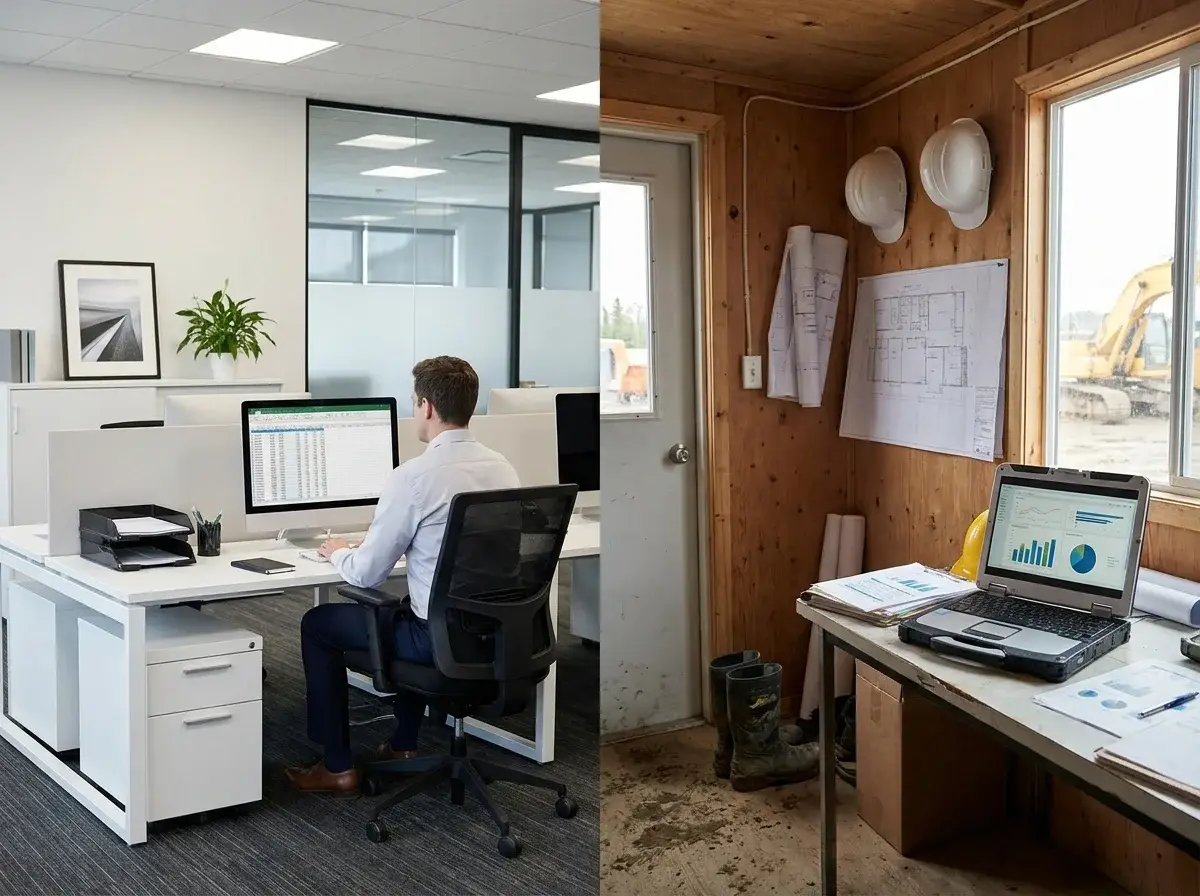
(For Illustrative Purposes Only)
Standard accounting works on steady sales and predictable fixed costs. Construction works quite differently: separate projects, irregular income, and a workforce that’s always changing.
Project based income and variable costs
Most businesses track income and costs across the whole company. In construction, you track them job by job.
Each project has its own budget, margin goal, and timeline. A groundworks contract in Leeds and a fit-out in Bristol might run side by side, each with totally different costs.
Once work starts, costs can shift. Variations, change orders, material price hikes, and surprise ground conditions all move the numbers after you’ve agreed on the price.
That’s why job costing is so important. You need to know which project is making money and which isn’t while you can still change the outcome.
A fluid, subcontracted workforce
Most construction firms don’t just use salaried staff. You’ll probably have a mix of the following:
- Direct employees paid through PAYE
- Subcontractors paid under the Construction Industry Scheme (CIS)
- Agency workers invoiced by the agency
- Self-employed operatives on short-term gigs
Each group comes with its own rules. With CIS, you have to verify subcontractors with HMRC, deduct 20%, 30%, or 0% (for those with Gross Payment Status) where needed, issue deduction statements, and file monthly returns by the 19th.
Numbers change every week as sites open or close. Payroll and payment records need to keep up, and if you get employment status wrong, HMRC could challenge you for IR35 or misclassification.
Long contracts and revenue timing
A build might run for 18 months or more, crossing two or three accounting periods. Recognising revenue isn’t as easy as sending an invoice and calling it a sale.
Under FRS 102 or IFRS 15, you recognise income as the work gets done, not when you get paid. Applications for payment, valuations, and certificates rarely match the real progress on site.
Retentions complicate things even more; usually 3% to 5% of the contract value gets held back, often for a year after practical completion.
Job costing: the foundation of construction accounting
Job costing means you assign every cost and labour hour to a specific project. That’s how you measure real profitability.
When you split direct from indirect costs, set up a repeatable coding process, and check the numbers while jobs are still live, you spot which projects are making money and which ones are quietly draining it.
Direct costs vs indirect costs
Direct costs tie straight to one job. If the project didn’t exist, neither would the cost.
Indirect costs support the whole business, not just one site. You still need to recover them, so usually you allocate them to jobs as a percentage of direct cost or labour hours.
| Direct costs | Indirect costs (overheads) |
|---|---|
| Materials for the job | Office rent and utilities |
| Site labour wages and NIC | Admin and bookkeeping salaries |
| Subcontractor invoices | Public liability and PI insurance |
| Plant and tool hire for that site | Owned plant depreciation |
| Skips, scaffolding, permits | Accountancy and software costs |
| Site welfare and waste removal | Vans not tied to one project |
How to set up job costing (step by step)
- Create each project as a separate tracking category in your accounting software. Use projects, jobs, or tracking codes, and stick to a consistent reference like the address and a number.
- Code every expense to the right job as soon as it comes in. Allocate purchase invoices, card payments, and subcontractor bills on the day they arrive, not at VAT quarter end.
- Track labour hours by project with timesheets. Log the hours against the job and cost code, then apply a fully burdened hourly rate that covers the employer’s NIC, pension, and holiday pay.
- Check job profitability reports weekly for active jobs, comparing committed and actual costs with the original estimate. That way, you can raise variations before the money’s spent.
Worked example: job costing a small project
Let’s look at a single-storey rear extension with a contract value of £40,000:
| Item | Cost |
|---|---|
| Materials (blocks, timber, roofing, glazing) | £11,000 |
| On-site labour (280 hours at £34 burdened) | £9,500 |
| Subcontractor: electrician and first fix | £3,500 |
| Allocated overheads (16% of direct costs) | £4,000 |
| Total job cost | £28,000 |
Gross profit is £40,000 minus £28,000, so £12,000. Gross margin is £12,000 divided by £40,000, which comes out to 30%.
If you add just 40 extra labour hours, that’s another £1,360, and your margin drops to about 26.6%. That’s why those weekly cost reviews matter way more than just looking at the numbers at year end.
Work in progress (WIP) and retentions explained
Work in progress is the value of work you’ve completed but haven’t invoiced or been paid for yet. It’s revenue you’ve earned, but it’s not in your accounts yet.
Retentions are amounts your client holds back from payments until the job is signed off. Both WIP and retentions sit on your balance sheet as current assets; they affect how much cash you can actually use.
What work in progress means in construction
If you only record revenue when you invoice, your profit and loss account won’t match what your teams have built.
Busy months look weak: your team’s done the work, but you haven’t billed it yet. Later, you finally invoice and those months look weirdly strong. That inconsistency makes it harder to spot margin problems early.
Worked example: Your site manager values completed work at £30,000 at month-end. Your progress billing application only covers £18,000. The other £12,000 is WIP, and it belongs in this period’s revenue, not next month’s.
This is why progress billing cycles, valuations, and your accounts need to match up. Under-valuation is a common reason turnover gets understated.
How retentions work
Retentions, called retainage in the US, are a percentage of each payment the client holds as security against defects.
Contract retainage is usually 3% to 5% of contract value. Typically, you get half released at practical completion, and the rest after the defects liability period, usually 6 to 12 months later.
| Item | Typical position |
|---|---|
| Retention rate | 3% to 5% of contract value |
| Release at practical completion | Half of the retained sum |
| Defects liability period | 6 to 12 months |
| Final release | Balance after defects are made good |
You’ll also hold retention from your own subcontractors, which sits in accounts payable. Chasing final release is a classic source of late payments and pressure on working capital.
Where WIP and retentions sit on your balance sheet
Both show up as current assets. WIP usually appears as amounts recoverable on contracts.
Retentions get listed separately as retentions receivable, not just lumped into accounts receivable.
Splitting them out really helps with cash flow management. A £40,000 retention balance is actual income, but you can’t spend it this month.
Keeping both figures visible stops you from overstating available cash. It helps you plan for the lag between billing and getting paid.
Revenue recognition methods for construction contracts
The method you choose determines when income appears in your accounts, and most UK construction firms use accrual accounting because it reflects the true position of long, staged projects.
The four main methods compared
There are four ways a construction business can recognise revenue, and the right one depends on the size of the firm and the length of its contracts. The table below sets them out at a glance.
Under the cash basis, you record income only when payment lands in your account and expenses only when you pay them. It is simple to run and is now the default method for sole traders and partnerships regardless of turnover, but Limited Companies are legally required to use traditional accrual accounting. However, it gives a poor picture of profit on projects that span several months.
The accrual basis records income when it is earned and costs when they are incurred, regardless of when cash actually moves. This matches revenue to the work done and is the standard approach for most construction businesses.
The percentage of completion method recognises revenue in proportion to how much of the project has been finished. It is the usual choice for long-term contracts, as it spreads income across the life of the build rather than bunching it at the end.
The completed contract method holds back all revenue until the project is fully finished. It is conservative and can distort your figures on multi-year work, so it tends to suit short or uncertain contracts.
Percentage of completion and FRS 102
FRS 102 is the UK accounting standard that governs how construction businesses report revenue on long-term contracts. Where the outcome of a contract can be estimated reliably, it generally requires the percentage of completion method, so income and the related costs are recognised as the work progresses rather than all at once.
The five-step revenue recognition process
To apply revenue recognition consistently, work through five steps:
- Identify the contract with your customer.
- Identify the performance obligations, or the scope of work you have agreed to deliver.
- Determine the transaction price, including your markup.
- Allocate that price across the performance obligations.
- Recognise revenue as each obligation is satisfied.
Following these steps keeps your reported income in line with the work actually delivered, which is exactly what accurate construction accounting depends on.
Financial statements and KPIs every contractor should track
| KPI | What it tells you | How to read it |
|---|---|---|
| Gross margin per job | Profitability of each project | Compare against your target margin |
| Work in progress value | Earned but uninvoiced revenue | Rising WIP can signal billing delays |
| Cash conversion period | Days between spending and being paid | Shorter is healthier |
| Retentions outstanding | Cash held back by clients | Plan for the delay before release |
| Cost variance | Actual vs budgeted cost per job | Catch overruns early |
Managing cash flow in construction
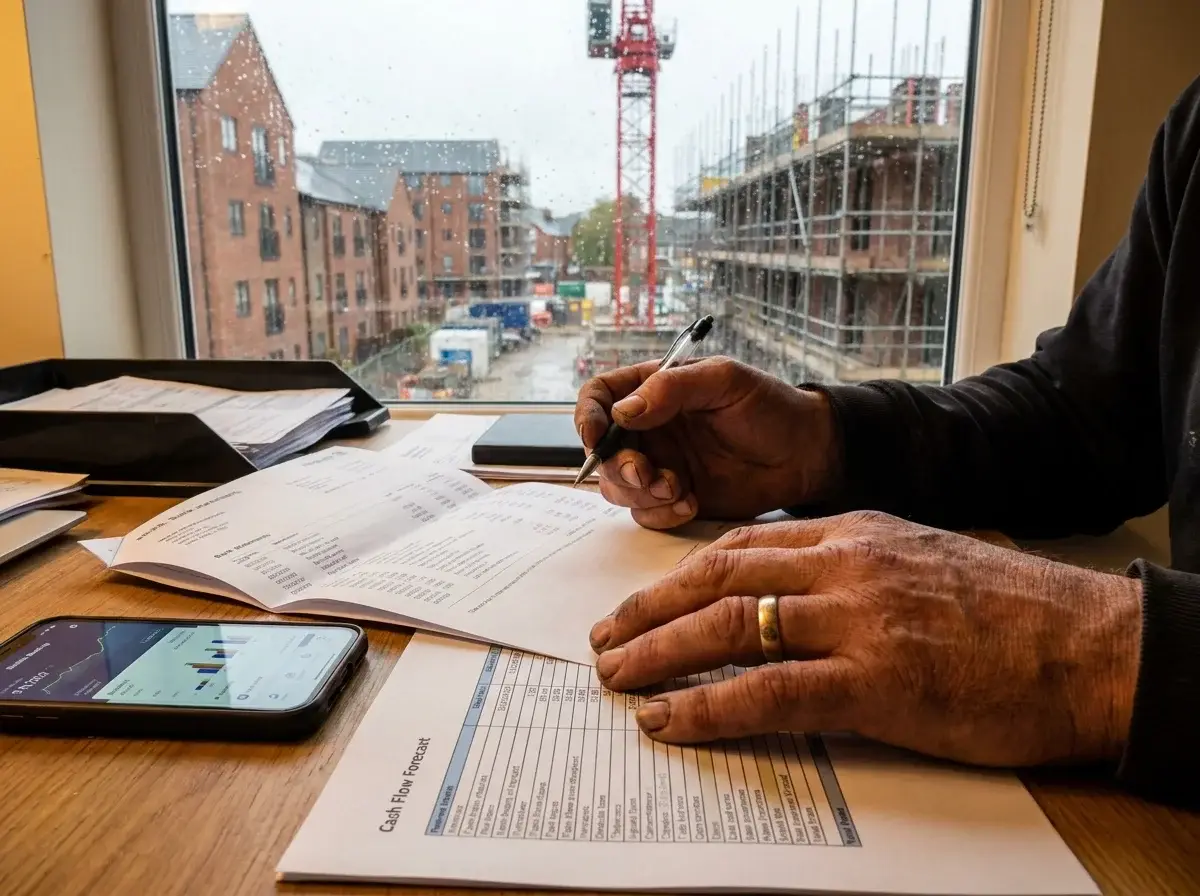
(For Illustrative Purposes Only)
Cash flow problems bring down more construction businesses than anything else. The timing gap between when you spend and when you get paid and the habits you develop to handle that gap decide if a profitable contract will actually keep you afloat.
Why cash flow causes construction failures
You pay for materials, labour, and plant hire well before your client pays you. That gap can easily stretch to 60 or even 90 days, factoring in valuation dates, payment terms, and retention.
Say you have a £100,000 contract. You order materials, pay your team for three weeks, and hire a telehandler suddenly; £40,000 is gone from your account.
The client pays you 45 days later. For those 45 days, you’re basically funding their project out of your own bank balance.
If you take on a second contract at the same time, the shortfall doubles. Suddenly, cash gets tight fast.
Showing outgoings against incoming payments across the contract.
This is why you can show a healthy profit on paper and still struggle to make payroll. Profit is calculated over the whole job, but you need cash in hand when the merchant’s invoice is due.
Practical steps to protect your cash
There are a few things you can tweak in how you bill and buy that will close the gap.
- Invoice in stages tied to milestones. Bill when you finish groundworks, the frame, first fix, and so on, instead of waiting for practical completion.
- Request deposits before ordering materials. If a client wants £15,000 of custom joinery, ask them to pay upfront.
- Match spending to confirmed revenue. Only commit to new plant, vans, or extra staff for jobs you have signed contracts for.
- Chase late payments with clear credit control. Agree on payment terms in writing, send statements weekly, and escalate on a set schedule, not just when things get urgent.
- Pause work if payments stop. Your contract should let you suspend work, and using that right early is cheaper than funding a non-payer for another month.
Construction finance and invoice factoring
If you still have a gap, invoice factoring lets you sell unpaid invoices to a finance provider and get most of the value within a few days. You give up a percentage as fees, so weigh that cost against the risk of running short.
Specialist construction finance exists, too. These options fit around applications for payment, retention, and staged billing instead of just standard trade invoices.
Remember, the VAT reverse charge affects your cash position as well. VAT you used to hold for a while no longer passes through your account.
Crucially, while CIS deductions apply only to the labour element of a bill, the VAT Reverse Charge applies to the entire invoice value (both labour and materials) if the service falls under CIS rules.
Common construction accounting mistakes to avoid
(For Illustrative Purposes Only)
Most construction accounting problems come from a handful of avoidable mistakes, and catching them early protects both your profit and your peace of mind.
- Poor job costing. Failing to assign costs and labour to specific projects, so you never really know which jobs make money and which lose it.
- Mis-coded or late expenses. Coding costs to the wrong job or recording them weeks later, which quietly distorts the profitability of every project.
- Ignoring work in progress. Leaving completed but uninvoiced work out of your accounts, which understates revenue in busy months and overstates it later.
- Forgetting retentions. Treating retained cash as money in the bank when 3 to 5 per cent of each contract is held back for months and must be tracked separately.
- No staged billing. Waiting until a project ends to invoice means you fund materials, labour and plant for weeks before a single payment arrives.
- Weak credit control. Letting late payments slide with no chasing process, which turns a paper profit into a cash flow crisis.
- No cash flow forecasting. Running without a forward view of money in and out leaves the business exposed the moment a client pays late or a cost overruns.
Choosing construction accounting software
(For Illustrative Purposes Only)
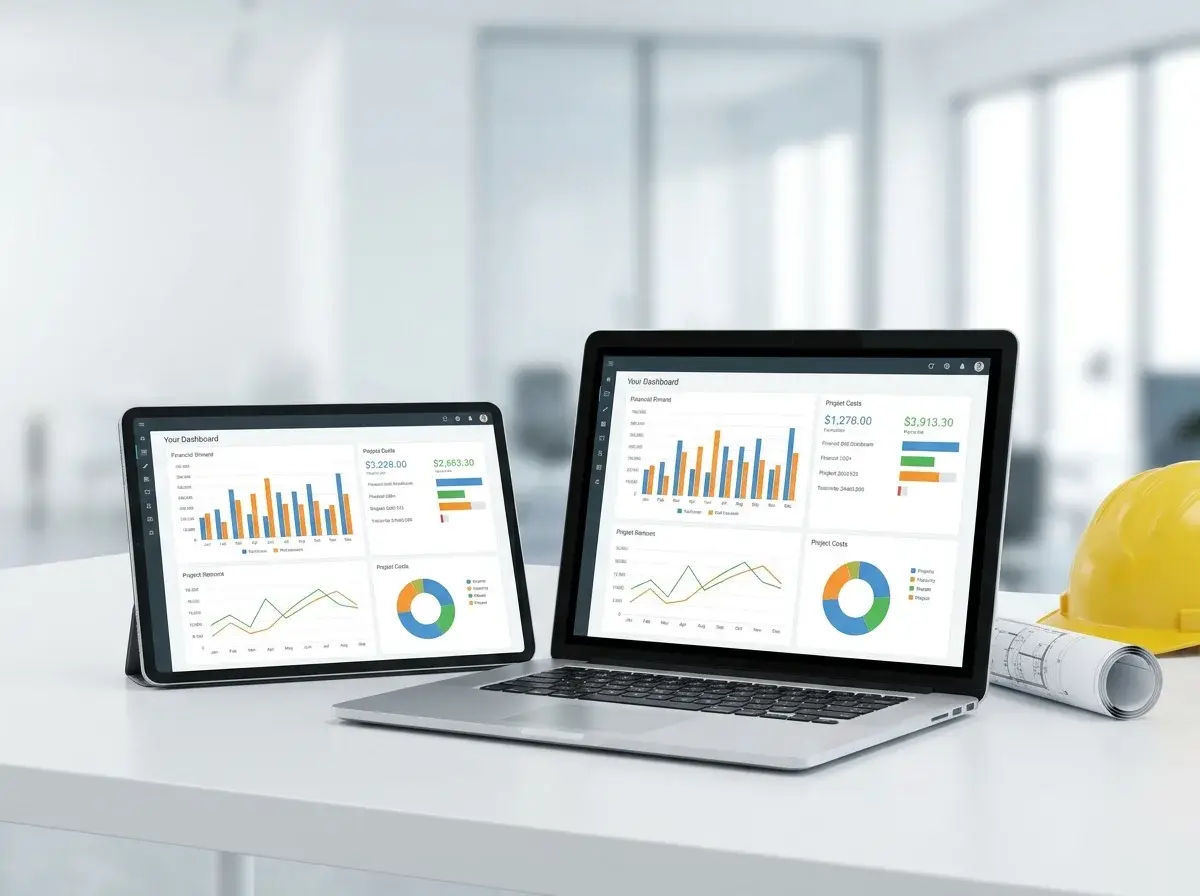
The right software automates CIS, job costing and VAT, so you spend less time on admin and more time on site.
What to look for in construction software
Not every accounting package handles construction well, so focus on the features that matter for project-based work. Look for job costing or project tracking so you can tag every cost to the right job and see profit per project. Check for built-in CIS support that verifies subcontractors, applies the correct deduction rate and files monthly returns, including nil returns. Make sure it handles the VAT domestic reverse charge correctly on invoices. It should be MTD compatible for both VAT and income tax and offer mobile access so you can record costs and photograph receipts from the site.
Popular options compared
| Software | Job costing | CIS support | VAT reverse charge | MTD ready | Mobile app | Best suited to |
|---|---|---|---|---|---|---|
| Xero | Via Projects feature and add-ons | Yes, built in | Yes | Yes | Yes | Small-to-mid firms wanting a large app ecosystem |
| QuickBooks | Yes, built in | Yes, built in | Yes | Yes | Yes | Firms wanting job costing and CIS in one package |
| Sage | Yes, built in | Yes, built in | Yes | Yes | Yes (cloud plans) | Established firms, and those preferring desktop |
| Construction-specific tools | Advanced, project-led | Yes | Yes | Varies by product | Varies | Larger or project-heavy contractors |
When to work with a specialist construction accountant

As your projects grow, so does the complexity of your finances. The risk of messing up compliance grows, too.
Signs you need specialist help
You might want specialist support if any of these sound familiar:
- You’ve started taking on subcontractors and need to verify and pay them correctly.
- Your turnover has crossed the £90,000 VAT threshold, or you expect it to soon.
- You’re struggling with CIS and VAT compliance, especially the domestic reverse charge.
- You can’t say which jobs made money and which ones didn’t.
Each of these is manageable on its own. But when they pile up, your bookkeeping has probably outgrown a general approach.
What a construction accountant does for you
Our specialist understands the systems and rules your industry actually uses. That usually covers:
| Area | What it involves |
|---|---|
| CIS | Registration, subcontractor verification, monthly returns, and deduction statements |
| Job costing | Setting up labour, materials, and plant tracking so you see profit per project |
| VAT | Scheme selection, reverse charge treatment, and Making Tax Digital filing |
| Year end | Statutory accounts prepared under FRS 102, including long-term contracts |
| Cash flow | Planning around retentions, staged payments, and slow customer settlement |
The value is in the detail. Small errors in CIS deductions or contract revenue can quietly eat into your margin over the year.
How KG Business can help
You don’t need to turn into a tax expert to run a successful construction business. Our team works with contractors, subcontractors, developers, and property refurbishment firms across the UK; we know all about retentions, tight margins, and what HMRC expects.
We’ll look at how you work now, tidy up what needs attention, and give you clear numbers you can actually plan with.
Get in touch with us today, or book a free consultation to talk through your next project.
Frequently asked questions
What type of accounting is used in construction?
Most UK construction businesses use accrual accounting combined with job costing. Accrual accounting records income when it is earned and costs when they are incurred, while job costing tracks profit on each project. Together they give an accurate view of performance across long, staged contracts.
What is job costing?
Job costing is the practice of assigning every cost and labour hour to a specific project, so you can measure its true profitability. It separates direct costs, such as materials and subcontractor labour, from overheads, letting you see which jobs make money and catch budget overruns early.
What is work in progress in construction accounting?
Work in progress, or WIP, is the value of work you have completed on a project but not yet invoiced or been paid for. It represents revenue you have earned but not yet recognised, and it appears as a current asset on your balance sheet.
How do retentions work in construction?
A retention is a sum the client withholds from your payments, typically 3 to 5 per cent of the contract value, as security against defects. They release it once the defects liability period ends, usually 6 to 12 months after completion. Track it as a current asset so you plan for the delay.
What accounting software is best for construction?
The best option is cloud software with job costing, CIS support and VAT reverse charge handling, such as Xero, QuickBooks or Sage. Larger contractors may add a construction-specific tool for advanced project costing. Choose one that is Making Tax Digital ready and works well on mobile from the site.
Do I need a specialist construction accountant?
A specialist accountant becomes worthwhile once you take on subcontractors, cross the £90,000 VAT threshold, or struggle with CIS and job costing. They set up your accounts correctly, handle compliance, and help you read the numbers, which reduces risk and frees you to focus on projects.