Employer NI now costs you 15% on every pound of pay above £5,000 a year, per employee. For a business with a handful of staff, that adds up to hundreds of pounds a month before you have paid a single wage. And yet there is a relief sitting on the table worth up to £10,500 a year that plenty of eligible employers never claim, simply because nobody told them it existed or they assumed HMRC would sort it out automatically.
It will not. Employment Allowance is not a grant, and nothing lands in your bank account. It works by reducing your employer NI bill through payroll, month by month, until the allowance runs out.
This guide sets out exactly who qualifies for 2026/27, who is excluded (including the single director trap that catches out more one-person companies than you would think), how to claim it step by step, how to backdate a missed claim for up to four years, and the mistakes that end up costing businesses money they never needed to spend.
What Is Employment Allowance and Why Is It Worth £10,500?

(For Illustrative Purposes Only)
Employment Allowance is the single most valuable NI relief available to small employers, and around 1.4 million businesses claimed it in 2025/26, according to research on employer NI and the current allowance rate. Thousands more eligible employers still miss it every year.
How the Allowance Reduces Your Employer NIC Bill
The allowance cuts your secondary Class 1 employer NIC liability by up to £10,500 for the tax year. It is set against your employer NI bill each time you run payroll, chipping away at what you owe HMRC until the full £10,500 has been used up.
It Is Not a Grant, a Refund, or a Cash Payment

(For Illustrative Purposes Only)
No cheque arrives. No transfer hits your account. Your monthly PAYE bill to HMRC is simply smaller than it would otherwise be, right up until the allowance is exhausted for the year. Employment Allowance has no bearing on Corporation Tax and does not touch employee National Insurance or take-home pay.
How £10,500 Covers Roughly £70,000 of Payroll at 15%

(For Illustrative Purposes Only)
At the 15% employer NIC rate, £10,500 offsets the employer NI due on roughly £70,000 of salary paid above the £5,000 Secondary Threshold. That is broadly equivalent to around three and a half full-time staff on the National Living Wage paying zero employer NI for the whole year.
A small business with a lean payroll can find the allowance wipes out its entire employer NI bill. A larger employer with a bigger wage bill will still get the full £10,500; it just covers a smaller slice of a bigger total.
Who Can Claim Employment Allowance in 2026/27?

(For Illustrative Purposes Only)
The eligibility rules are simpler than most employers assume, but the exact wording HMRC uses trips people up because it tests your NIC liability, not how many people you employ.
The Core Eligibility Test Every Employer Must Pass
You need three things in place. You must run a registered PAYE scheme, you must pay secondary Class 1 NIC on at least one employee, and at least one of those employees must not be a director, or you must have more than one director paid above the £5,000 Secondary Threshold.
Businesses, Charities, and Community Amateur Sports Clubs

(For Illustrative Purposes Only)
Most employer types qualify. That includes limited companies, sole traders with employees, partnerships, LLPs, charities, and community amateur sports clubs (CASCs).
Charities get an important exception: they are exempt from the public sector exclusion. A charity delivering NHS or council contracts can still claim, even though a public body doing the same work cannot.
The £100,000 NIC Cap That No Longer Exists
Until April 2025, employers with an employer NI bill over £100,000 in the previous tax year were shut out entirely, regardless of everything else lining up. That cap has been removed and remains removed for 2026/27, which opens the door to medium and larger employers who wrote off Employment Allowance years ago based on rules that no longer apply. Worth checking again if that describes your business.
Care and Support Worker Employers

(For Illustrative Purposes Only)
Domestic workers are usually excluded from Employment Allowance, but care and support workers carry a specific exception. Employers of care or support workers can claim even when those staff work in a domestic setting, which sidesteps the general domestic worker exclusion entirely.
Who Cannot Claim Employment Allowance (The Exclusions That Catch People Out)

(For Illustrative Purposes Only)
This is where the money gets lost. Most employers who miss out do not realise they are excluded until an accountant spots it, or worse, until HMRC claws the allowance back after the fact.
The Single Director Trap and Why It Costs You £1,135 a Year
A limited company cannot claim if the only person liable for secondary Class 1 NIC is a director. HMRC tests NIC liability, not headcount, so a company can employ several part-time workers and still fail this test if the director is the only one earning above the £5,000 Secondary Threshold.
At the 15% employer NIC rate applied to a typical director salary, this exclusion costs roughly £1,135 a year. Bring on one other employee paid above £5,000, whether a spouse, a genuine hire, or a second director, and the exclusion no longer applies.
Public Authorities and the 50% Public Sector Work Rule

(For Illustrative Purposes Only)
Public authorities and any employer carrying out more than 50% public sector functions cannot claim. Charities are the one exception to this rule, so a charity doing majority public sector work still qualifies where a non-charity body performing the same work would not.
Employers of Domestic Workers (Unless They Are Care Workers)
Employers of nannies, housekeepers, and other domestic staff are excluded from claiming. Employers of care or support workers sit outside this exclusion, even where those workers are employed in someone’s home.
Connected Companies and the One Claim Per Group Rule

(For Illustrative Purposes Only)
Connected companies share a single £10,500 allowance between the whole group, and only one PAYE scheme can claim it. If your business sits inside a group structure, someone needs to decide which company makes the claim, because HMRC will not split the allowance across multiple schemes.
Group structures with several payroll schemes running semi-independently are where this goes wrong most often. Two entities both flagging “yes” on their EPS without checking with each other is an easy, and costly, mistake.
Off-Payroll Workers and IR35 Deemed Payments

(For Illustrative Purposes Only)
Employment Allowance cannot be set against employer NI arising from deemed payments under the off-payroll working IR35 rules. Where a business engages contractors caught by IR35, and NIC is due on a deemed payment, that liability sits outside the allowance and must be paid in full.
How Employment Allowance Actually Works Through Your Payroll
(For Illustrative Purposes Only)
Most guides explain what Employment Allowance is and stop there. What actually matters is what it does to your monthly PAYE bill once you claim it.
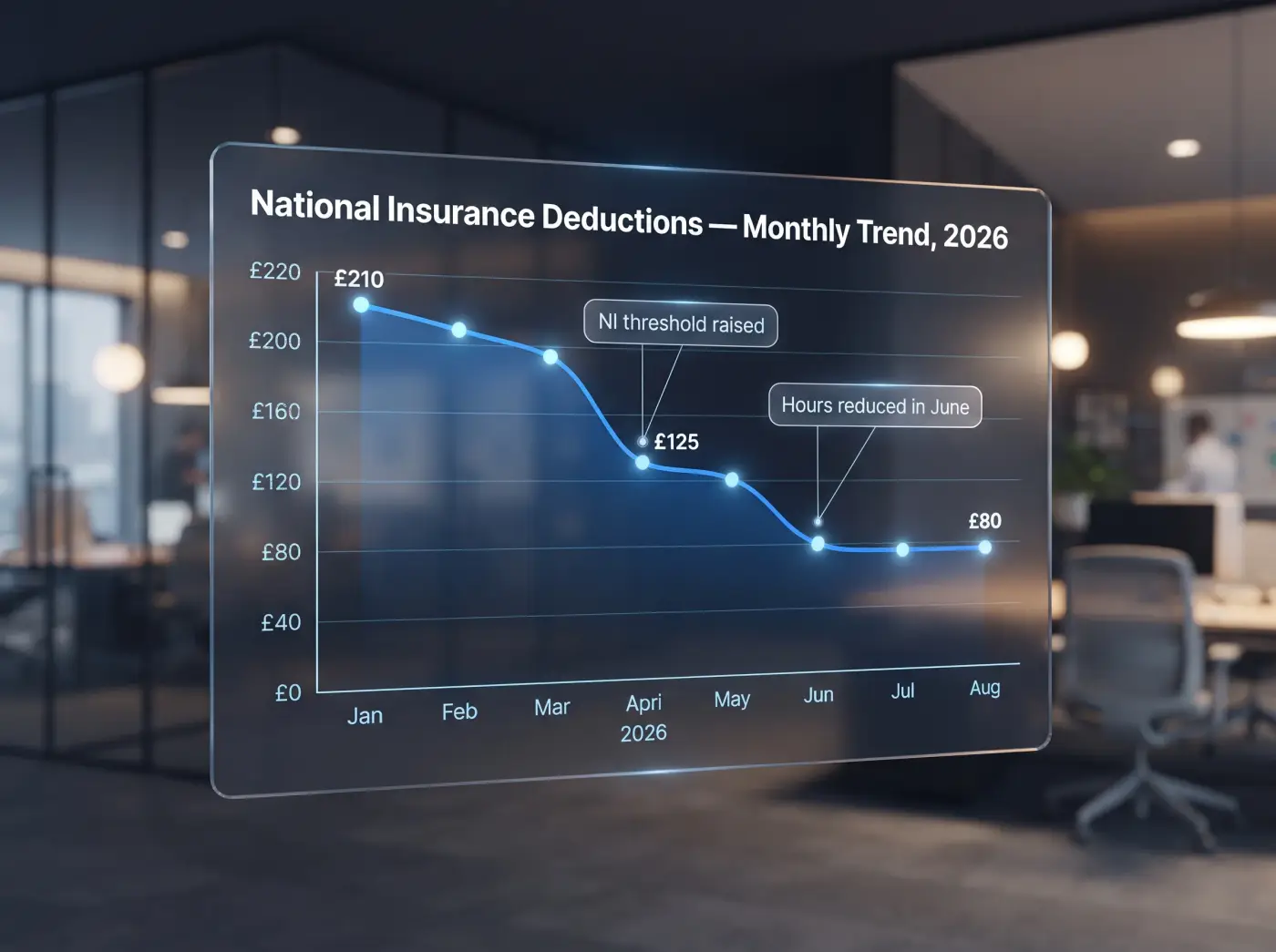
The Monthly Offset Until Your £10,500 Is Used Up
Take a company with a monthly employer NI liability of £3,000. In Month 1, employer NI is reduced to zero. Month 2, zero again. Month 3: zero again. By Month 4, only £1,500 of the allowance is left, so that month’s bill is £1,500 instead of £3,000. From Month 5 onwards, the full £10,500 is gone, and the company pays its ordinary employer NI bill for the rest of the year.
What Happens When Your NIC Liability Is Less Than £10,500
(For Illustrative Purposes Only)
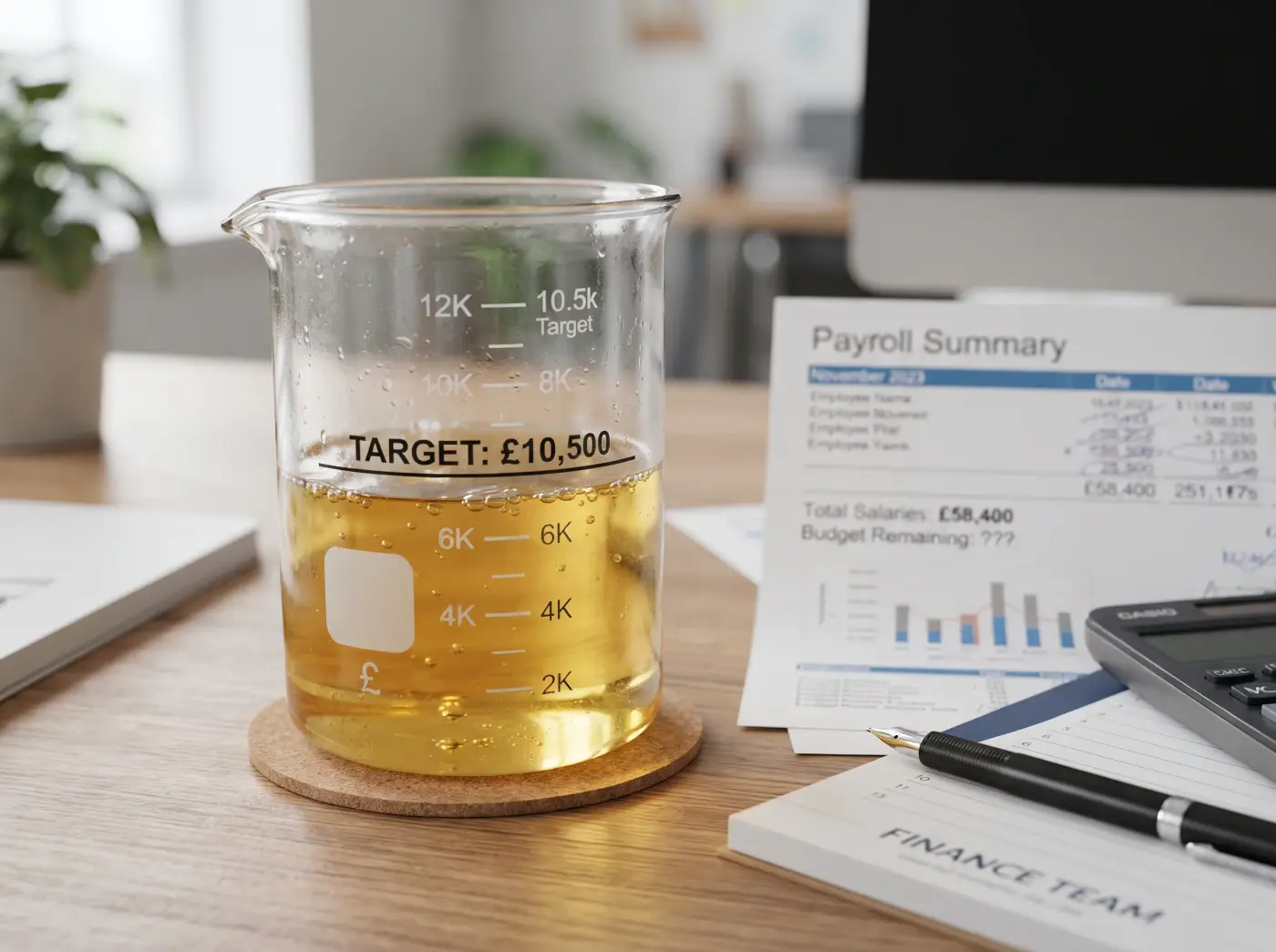
If your total annual employer NI liability comes in under £10,500, the allowance is capped at whatever your actual liability is. You cannot bank the leftover amount, and it does not carry forward into the next tax year. Once the year ends, any unused allowance simply disappears.
When Normal Employer NIC Charging Resumes
Once the £10,500 is fully absorbed, full employer NIC charging resumes for the rest of the tax year with no further offset. Budget for this. Businesses that plan payroll costs around a zero-NI month early in the year sometimes get caught out when the bill jumps back up later on.
How to Claim Employment Allowance Step by Step
(For Illustrative Purposes Only)
Claiming takes under two minutes, but missing it costs up to £10,500 a year, so there is no good reason to leave it unclaimed.
Claiming Through Your Payroll Software via the EPS
Most payroll software, including Sage, Xero, and BrightPay, has an Employment Allowance indicator. Set it to “Yes” and submit it to HMRC through your Employer Payment Summary (EPS). That single step activates the claim, according to guidance on claiming through payroll software via an EPS.
Claiming Through HMRC Basic PAYE Tools
Employers using HMRC’s free Basic PAYE Tools can submit the claim the same way. Open the employer section, set the Employment Allowance indicator to “Yes”, and submit it with your next EPS.
When to Claim (Start of the Tax Year or Any Point During It)

(For Illustrative Purposes Only)
You can claim at any point in the tax year, but claiming early means the offset starts working for you sooner. If you claim partway through the year, any employer NI already paid can be offset retrospectively against the allowance.
You Must Claim Every Year Because It Is Never Automatic
Employment Allowance does not roll over from one tax year to the next. HMRC will not apply it for you. Miss the claim and you pay full employer NI all year, with no offset at all, regardless of how many years you claimed it before.
Employment Allowance and the Subsidy Control Limit (Minimal Financial Assistance)
Employment Allowance is classed as a public subsidy and specifically as Minimal Financial Assistance (MFA) under the Subsidy Control Act 2022. Before you tick “Yes” on the EPS, you need to be sure you have room within your MFA threshold, which is currently a maximum of £315,000 in state subsidies across the current tax year and the previous two tax years.
If your business has received other grants or subsidies during that window, claiming the £10,500 allowance on top could take you over the £315,000 limit. Confirm this with your accountant before you claim, since exceeding the threshold can breach UK Subsidy Control law and lead to penalties or a clawback from HMRC.
Backdating Employment Allowance Claims for Previous Tax Years

(For Illustrative Purposes Only)
If your business has been paying employer NI for years without ever claiming Employment Allowance, you are almost certainly owed money.
How Far Back You Can Go (Four Tax Years)
HMRC allows backdated claims for up to four previous tax years. During 2026/27, that means you can still claim back as far as 2022/23. Each missed year needs its own separate EPS submission, so a four-year backdate means four claims, not one.
How Much You Could Recover (Up to £25,500)

(For Illustrative Purposes Only)
The allowance was £5,000 in earlier years and rose to £10,500 for 2025/26 and 2026/27. Depending on which years were missed, a full four-year backdate could recover up to £25,500 in total, though the exact figure depends entirely on which specific years apply to your business.
Each Year Uses the Rates and Rules That Applied at the Time
Every backdated year is assessed against the allowance amount, rate, and eligibility rules that applied at the time, not this year’s rules. The old £100,000 NIC cap applied to years before April 2025, so an employer who was excluded under that cap back then may not be able to backdate for those specific years, even if they qualify comfortably now.
Employment Allowance and Director Salary Planning

(For Illustrative Purposes Only)
For a sole director company, Employment Allowance is not only a payroll question. It shapes a genuine decision about how the business pays its director.
Why the Single Director Rule Forces a Salary Decision
A sole director company cannot claim Employment Allowance, so many directors set their salary at or below the £5,000 Secondary Threshold specifically to avoid paying employer NI they have no way to offset. That keeps the NIC bill at zero without needing the allowance at all.
Hiring Your First Employee Unlocks the Allowance for the Whole Year

(For Illustrative Purposes Only)
Bring on a PAYE employee earning above £5,000, and the company becomes eligible for Employment Allowance for the entire tax year, not just from the month you hired them. Any employer NI already paid earlier in the year can be offset retrospectively against the £10,500 allowance once the claim goes in.
The Salary and Dividend Split When Employment Allowance Is in Play

(For Illustrative Purposes Only)
Once Employment Allowance is available, the optimal director salary can sit above £5,000, because the NIC cost gets absorbed by the allowance instead of coming straight out of the business. The right split between salary and dividends depends on the director’s total NI position, the company’s corporation tax position, and the director’s personal tax band. This is a calculation worth reviewing with an accountant rather than working out on a spreadsheet alone, since it touches Corporation Tax deductions as well as NI.
Common Mistakes Businesses Make With Employment Allowance

(For Illustrative Purposes Only)
Every one of these mistakes costs real money, and we see all five of them in the practice every single tax year.
Never Claiming It at All
HMRC figures show around 1.4 million employers claimed in 2025/26, but thousands more eligible businesses simply did not. Some have never heard of the relief. Others assumed, wrongly, that it only applies to bigger companies.
Assuming It Applies Automatically
There is no automatic enrolment. If you do not tick the Employment Allowance indicator on your EPS, HMRC charges full employer NI with no offset, no matter how obviously eligible your business is.
Getting the Single Director Test Wrong Because of Headcount Not NIC Liability
A business with several part-time staff can still fail the test if the director is the only person paid above £5,000. HMRC checks NIC liability, not how many people appear on the payroll.
Connected Companies Both Claiming the Same Allowance
If two connected companies both submit a claim, HMRC will claw one of them back, and interest can be charged on top. Sort out in advance which entity in the group claims.
Not Reclaiming After Hiring a First Employee Mid-Year
Hiring a first employee partway through the year opens up eligibility for the entire tax year, not just from the hire date. Plenty of businesses never go back and reclaim the employer NI already paid in the earlier months, leaving genuine money unclaimed.
How KG Business Makes Sure You Claim Every Penny
Getting Employment Allowance right is one of the easiest wins in payroll, provided someone is watching the numbers from day one.
Eligibility Check at the Start of Every Tax Year
KG Business reviews Employment Allowance eligibility for every payroll client at the start of each tax year. That check covers the single director rule, connected company rules, and the public sector exclusion, so nothing gets missed because a business structure changed since the last review.
First EPS Claim Submitted Before Your Second Pay Run
The claim goes into the first EPS of the year, so the offset against your employer NI bill starts from the earliest possible month rather than being backdated later.
Backdated Claims Recovered Where Previous Years Were Missed
For new clients who have not claimed in previous years, KG Business checks backdating eligibility and submits claims for up to four previous tax years where the business genuinely qualified. If payroll has never had this checked, it is worth a conversation. Get in touch for a fixed-fee payroll quote and find out what your business could be owed.
Frequently Asked Questions
Can a single director limited company claim Employment Allowance?
No. If the only person liable for secondary Class 1 NIC is a company director, the company cannot claim. You need at least one other employee earning above the £5,000 Secondary Threshold. This exclusion costs roughly £1,135 a year on a typical director salary.
Can a sole director company claim Employment Allowance after hiring its first employee?
Yes. Once you hire an employee earning above the £5,000 Secondary Threshold, the company becomes eligible for the whole tax year, not just from the month of hire. Any employer NI already paid in earlier months can be offset retrospectively against the £10,500 allowance.
Do I need to claim Employment Allowance again each tax year?
Yes. It does not roll over, and HMRC will not apply it automatically. You must claim each tax year through your payroll software by selecting “Yes” on the Employment Allowance indicator in your EPS, or you pay full employer NI all year with no offset.
How do I claim Employment Allowance through HMRC Basic PAYE Tools?
Open HMRC Basic PAYE Tools, go to the employer section, and set the Employment Allowance indicator to “Yes”. Submit this through your next Employer Payment Summary. You can claim at any time during the tax year, but claiming early means the benefit starts sooner.
Can I reclaim Employment Allowance for previous tax years?
Yes. HMRC allows backdated claims for up to four previous tax years, meaning you can currently claim back as far as 2022/23. Each year needs its own separate EPS submission.
How much can I recover if I backdate Employment Allowance for four years?
Up to £25,500 in total, depending on which years were missed. The allowance was £5,000 in earlier years and rose to £10,500 for 2025/26 and 2026/27, so the exact recovery depends on the specific years being backdated.
Does Employment Allowance reduce employee National Insurance or Income Tax?
No. Employment Allowance only reduces the employer’s share of Class 1 National Insurance. It has no effect on employee NI, Income Tax, or take-home pay.
Is there a limit on how much subsidy or grant support my business can have alongside Employment Allowance?
Yes. Employment Allowance counts as Minimal Financial Assistance (MFA) under the Subsidy Control Act 2022. You can only claim it if doing so keeps your total state subsidies within £315,000 across the current tax year and the previous two tax years, so it is worth checking any other grants or subsidies received in that period before claiming.