Running a small business means juggling sales, expenses, and paperwork, sometimes all at once. Small business bookkeeping is about recording every payment in and out of your business, so you always know where your money stands.
Getting this right keeps you compliant with HMRC and shows you your actual profit. This guide walks you through the practical side of bookkeeping for small business owners in the UK.
You’ll see how to set up a system, pick the right software, and handle the records HMRC expects under Making Tax Digital. Whether you handle accounting for small business tasks yourself or want to bring in help later, understanding the basics puts you in control.
Spot problems early, plan for tax bills, and make decisions based on real numbers instead of guesswork. It’s not always fun, but it’s worth it.
What Is Small Business Bookkeeping and Why Does It Matter?
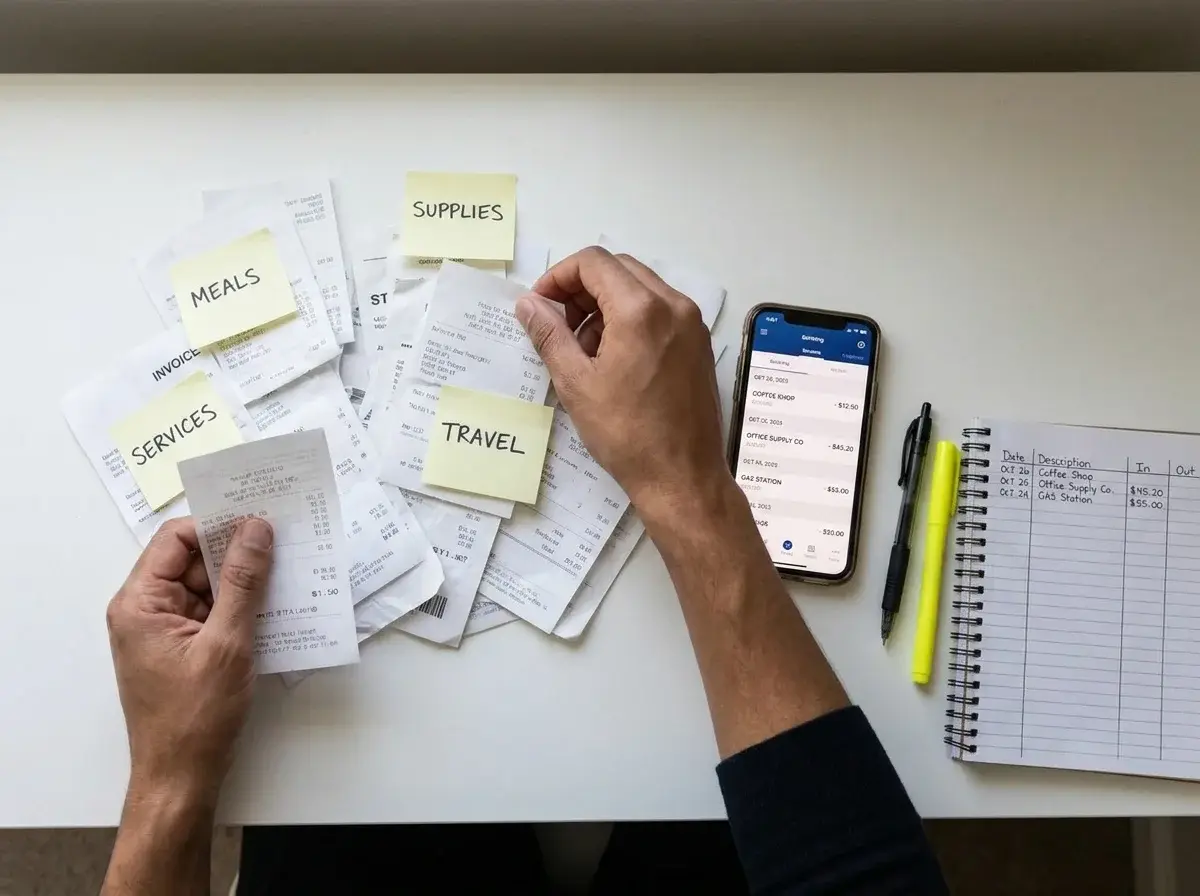
(For Illustrative Purposes Only)
Bookkeeping and accounting often get mixed up, but they play different roles in your business. Understanding both and why accurate records matter helps you avoid HMRC penalties and make smarter decisions about your money.
What Is Small Business Accounting?
Small business accounting means interpreting your financial data to guide decisions. Once you (or your bookkeeper) have recorded the numbers, an accountant or you, if you’re doing it solo, use them to work out profit margins, tax, and your business’s financial health.
Accounting covers tasks like preparing tax returns, forecasting cash flow, and advising on financial strategy. It answers questions like, “Should I hire someone new?” or “Can I afford this equipment?”
If bookkeeping tells you what happened, accounting tells you what it means and what to do next. They’re different skills, but they work together.
Bookkeeping vs Accounting for Small Business
Bookkeeping is about recording your business’s financial transactions every day. That means tracking sales, logging expenses, matching bank statements, and processing invoices.
Accounting builds on this by analysing the data. Here’s a simple breakdown of how they differ:
| Task | Bookkeeping | Accounting |
|---|---|---|
| Recording sales and expenses | Yes | No |
| Reconciling bank statements | Yes | No |
| Preparing tax returns | Sometimes | Yes |
| Financial forecasting | No | Yes |
| Strategic business advice | No | Yes |
Basic small business bookkeeping is something you can handle yourself, especially with simple bookkeeping software now everywhere. But for accounting, especially at tax time, it’s usually worth bringing in a professional.
Why Small Business Bookkeeping Matters
Good bookkeeping gives you a clear picture of your cash flow. Without it, you might not know if you can pay a supplier, take on staff, or cover a tax bill when it lands.
HMRC requires you to keep financial records for at least 5 years after the self-assessment deadline if you’re self-employed. Limited companies have to keep records for 6 years.
If you don’t, you risk fines or a tough compliance check. Accurate books also matter if you want to borrow money; lenders and investors will want to see your accounts before agreeing to any finance.
Messy or incomplete records make this harder and can delay or block funding altogether. Here are a few accounting tips for small businesses to keep your records in order:
- Keep every receipt and invoice, even the tiny ones
- Reconcile your bank statements monthly, not just at year-end
- Separate business and personal spending from the start
- Back up digital records in more than one place
These steps make it easier to answer HMRC’s questions if they ever ask and give you a clearer view of how your business is really performing.
Bookkeeping Requirements by Business Type in the UK
| Sole Trader | Limited Company | Partnership | |
|---|---|---|---|
| Tax Return Type | Self Assessment | Company Tax Return (CT600) | Partnership return + individual Self Assessment |
| Filing Deadlines | 31 January (online) | 12 months after accounting period ends | 31 January (online) |
| Records Required | Income, expenses, receipts for 5 years | Statutory accounting records for 6 years | Partnership income, expenses, profit share for 5 years |
| Companies House Filing | No | Yes | No |
| MTD Applicability | MTD for Income Tax from April 2026 (above £50k) | MTD for VAT (if VAT-registered) | MTD for Income Tax from April 2026 (above £50k) |
| Audit Requirements | None | Required if turnover exceeds £10.2m | None (unless LLP exceeding thresholds) |
Your bookkeeping duties depend on your business structure. Sole traders face the fewest rules, limited companies have the most, and partnerships sit somewhere in the middle.
Bookkeeping for Sole Traders and Small Businesses
If you’re a sole trader, record-keeping is pretty straightforward. Track all business income and expenses, keep receipts and invoices, and note any money you take out for personal use.
Note: HMRC made “Cash Basis” accounting the default method for sole traders, meaning you simply record income and expenses when the money actually enters or leaves your bank account, with the old turnover restrictions now removed.
You must submit a self-assessment tax return each year and pay income tax and National Insurance on your profits. HMRC expects you to keep these records for at least five years after the 31 January deadline for the relevant tax year.
Many bookkeepers suggest opening a separate bank account, even though it’s not a legal must for sole traders. It just makes tracking income and expenses easier, especially at tax time.
Accounting for Small Businesses: Sole Traders vs Limited Companies
The gap between these two structures is significant, and it’s worth understanding before you decide which one suits you.
| Requirement | Sole Trader | Limited Company |
|---|---|---|
| Tax return | Self Assessment | Company Tax Return |
| Tax paid | Income tax and National Insurance | Corporation Tax |
| Annual accounts | Not required | Must file with Companies House |
| Record separation | Optional but useful | Legally required |
| Personal liability | Unlimited | Limited to the company |
If you run a limited company, you must keep your business and personal finances separate at all times. That’s not optional; it’s a legal requirement tied to your company’s status as a separate entity.
Small Company Accounting Requirements in the UK
Limited companies have the heaviest bookkeeping load. You need to keep statutory accounting records showing the company’s financial position, file annual accounts with Companies House, and submit a company tax return to HMRC.
You also need to register for corporation tax within three months of starting to trade. If you run a business in partnership with others, things work differently again.
The partnership itself must submit a partnership tax return, and each partner files an individual self-assessment return covering their share of the profits. Whichever structure you pick, keeping accurate records year-round makes every filing deadline easier to meet.
Single-Entry vs Double-Entry Bookkeeping: Which Do You Need?
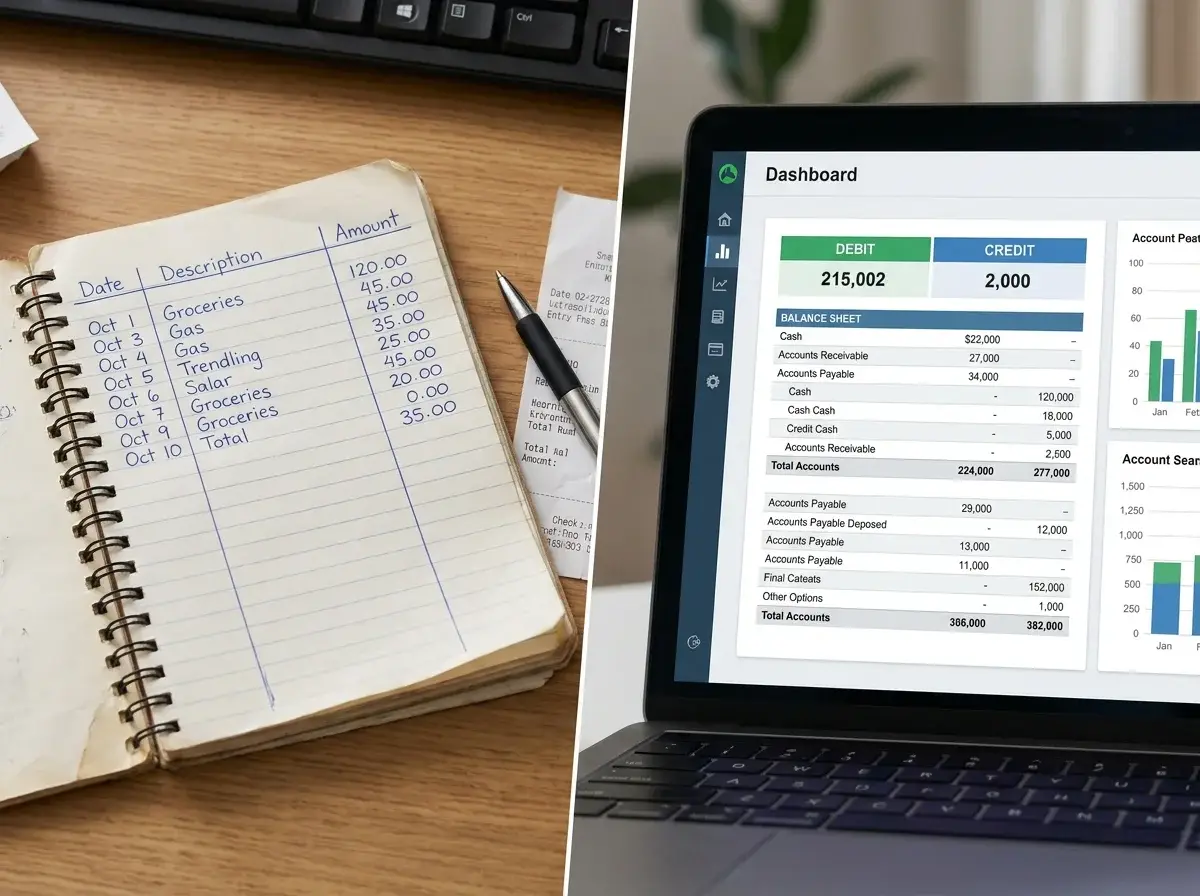
(For Illustrative Purposes Only)
Small business accounting UK rules don’t force you into one method, but your business structure often decides for you. Sole traders can usually keep things simple, while limited companies must use a stricter system.
Single-Entry Bookkeeping for a Small Business
Single-entry bookkeeping is the simplest form for small business owners. You record income and expenses once, usually in a cash book or spreadsheet.
This method works for sole traders below the VAT threshold with straightforward finances. If you invoice clients, pay a few expenses, and don’t hold stock, single-entry could be enough.
But it has limits. You won’t get a full picture of assets, liabilities, or business value, and it’s easier to make mistakes since there’s no second entry to check against.
Many bookkeepers still suggest single-entry for very early-stage businesses. It’s quick, cheap, and easy to understand without any training.
Double-Entry Bookkeeping for Small Businesses
Double-entry bookkeeping records every transaction twice, once as a debit and once as a credit. This creates a system of checks that single-entry can’t offer.
Limited companies must use double-entry, since it produces the balance sheet and profit and loss account required by law. It also gives you a clearer view of your business, including debts, assets, and cash flow.
Here’s a simple example. Say you buy office supplies for £200, paid from your business bank account:
- Debit: Office supplies expense account, £200
- Credit: Bank account, £200
This shows both what you bought and where the money came from. Every transaction affects two accounts, which helps catch mistakes early.
Which Bookkeeping Method Is Best for Your Business?
Your choice depends on your business type and how you see it growing.
| Business type | Recommended method |
|---|---|
| Sole trader, low turnover | Single-entry |
| Sole trader, growing or VAT-registered | Double-entry |
| Limited company | Double-entry (required) |
| Business seeking loans or investment | Double-entry |
If you plan to grow, borrow money, or eventually sell your business, double-entry gives lenders and buyers the detail they expect. Many bookkeeping services suggest switching to double-entry early, even before it’s required, so your records grow with your business and don’t need a rebuild later.
Best Bookkeeping Software for Small Businesses
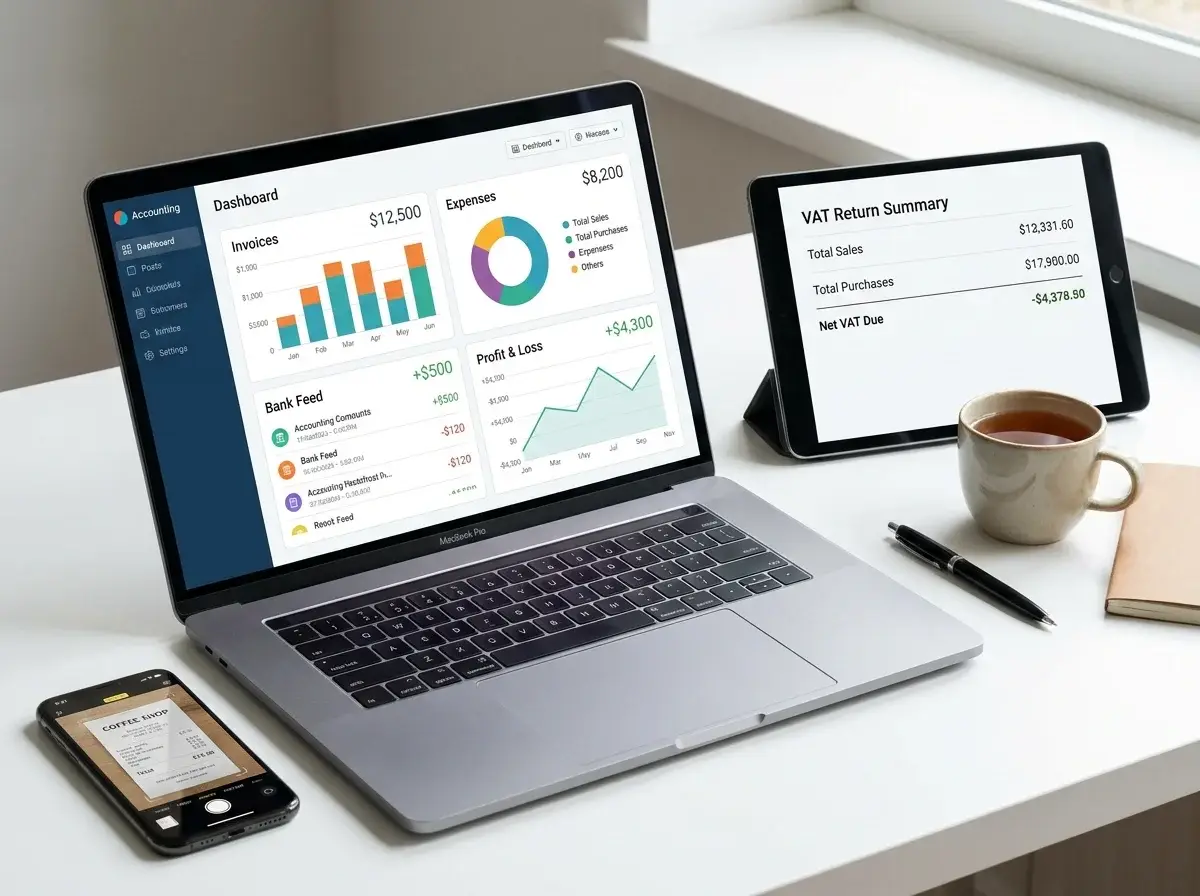
(For Illustrative Purposes Only)
Picking the right software depends on your business type, budget, and how much support you want with Making Tax Digital. The right choice can save you time on data entry and help you stay on top of your tax obligations.
What to Look for in Small Business Accounting Software
Check that any software you pick supports MTD for VAT and, if it applies, MTD for income tax. That’s now a legal requirement for most businesses, not just a nice-to-have.
Look for automatic bank feeds so transactions import without you typing them in. Clear invoicing tools and the ability to track expenses on the go (ideally through a mobile app) make life easier.
Consider how many users you need. Some providers charge more once you add your accountant or staff, while others let you add unlimited users on every plan.
Watch the pricing structure. Many providers bump up the price after an introductory period, so check the ongoing cost, not just the first few months.
Xero, QuickBooks, Sage, FreeAgent and Wave
These five platforms cover most small business needs. They suit everyone from sole traders to growing companies with staff.
- Xero: Prices start at about £15 a month. You can add unlimited users on every plan, which is great if you plan to grow or bring in an accountant. It also supports MTD for VAT and Income Tax.
- QuickBooks: Prices start at around £12 a month. It’s got a low entry cost and strong mobile features, like GPS mileage tracking, so it fits sole traders and the self-employed well.
- Sage: Prices start at about £12 a month, and there’s a free plan for non-VAT-registered sole traders. Sage was built for UK tax rules, so it’s solid for VAT and payroll.
- FreeAgent: Free if you bank with NatWest, RBS, Ulster Bank, or Mettle. It’s a good pick for freelancers and landlords who want strong invoicing without extra cost.
- Wave: Free for businesses with simple needs like basic invoicing and expense tracking. If your bookkeeping is straightforward, Wave covers the basics.
You can add Dext to any of these platforms. Dext scans and stores receipts automatically, which saves you from piles of paperwork.
Prices for all software can change, so check the latest rates before you sign up.
Easy Bookkeeping for Small Business Using Software
Once you set up your software, most daily bookkeeping runs on autopilot. Bank feeds pull in your transactions each day, so you’re not stuck typing them in.
You can set up rules to sort common transactions into categories automatically. That really cuts down on manual work and helps reduce mistakes.
Sending invoices just takes a few minutes. You can set up reminders for late payments, too.
Most platforms let you snap a photo of a receipt and upload it from your phone. That’s a lifesaver when you’re on the go.
At the end of each quarter, your software can generate the reports you need for MTD submissions. This means you won’t scramble at the last minute when a deadline sneaks up.
Making Tax Digital for Small Business Accounting
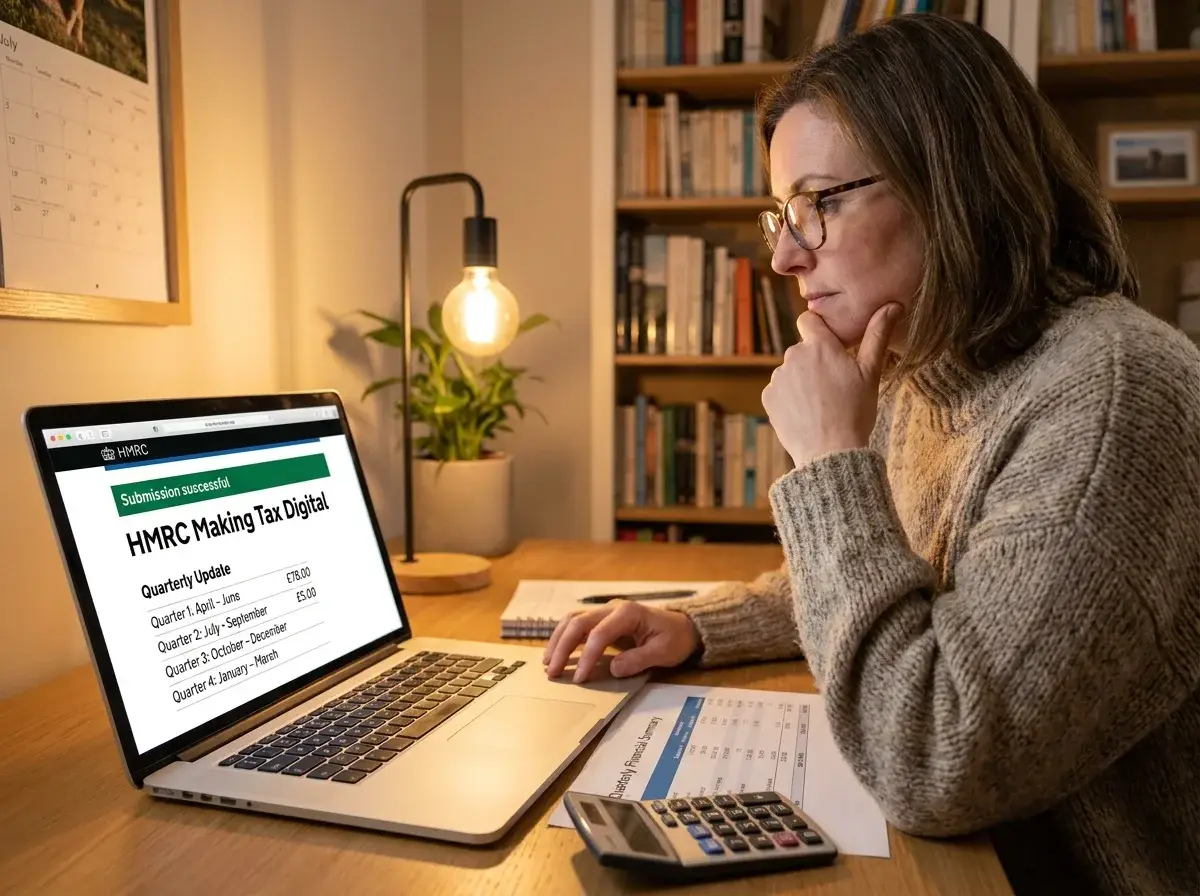
(For Illustrative Purposes Only)
Making Tax Digital is changing how you keep records and report tax to HMRC. If you run a small business, it’s worth knowing what applies to you and when.
What MTD Means for Small Businesses
Making Tax Digital, or MTD, is HMRC’s plan to move tax records online. It changes how you keep your books and how you send info to HMRC.
MTD for VAT already applies to all VAT-registered businesses. There aren’t exceptions based on turnover anymore.
MTD for Income Tax is now mandatory, too. From April 2026, it applies if you’re a sole trader or landlord with gross income above £50,000.
The threshold drops to £30,000 from April 2027 and £20,000 from April 2028. Each year, more small businesses and landlords need to comply, so if your income sits near these thresholds, check your position now.
Ignoring MTD isn’t really an option if you’re in scope. HMRC can issue penalties for late or incorrect submissions.
MTD and Small Business Bookkeeping
MTD changes how often you report to HMRC. Instead of one annual tax return, you now send four quarterly updates and a final declaration.
Here’s what the year looks like if you elect to use standard calendar quarters (HMRC’s default dates run from the 6th of one month to the 5th of the next, but most software lets you switch to calendar months):
- Quarter 1 update – covers April to June
- Quarter 2 update – covers July to September
- Quarter 3 update – covers October to December
- Quarter 4 update – covers January to March
- Final declaration – due by 31 January the following year
Each update needs accurate, up-to-date records. You really can’t leave your bookkeeping until the end of the year anymore.
You’ll need to record income and expenses as you go. Waiting until January to sort out a year’s worth of receipts just won’t work under MTD.
Good habits matter here. Set aside time each week or month to update your records instead of letting things pile up.
MTD-Compatible Accounting Software
Under MTD, you have to use software that connects directly to HMRC’s systems. A basic spreadsheet by itself isn’t enough anymore.
If you still want to use spreadsheets, you’ll need bridging software to link your spreadsheet to HMRC for digital submissions.
Most small businesses find dedicated accounting software easier. These tools handle calculations, deadlines, and submissions in one place, which lowers the risk of errors.
When you shop for software, check that it’s listed as HMRC-recognised for MTD. Not every tool meets the requirements, so don’t skip this step.
Popular options include cloud-based platforms that sync with your bank account. That saves you time and cuts down on manual data entry.
Whatever you choose, make sure it fits your business size and needs. The right choice now will make each quarterly submission way less stressful.
How Much Does Small Business Bookkeeping Cost?
(For Illustrative Purposes Only)
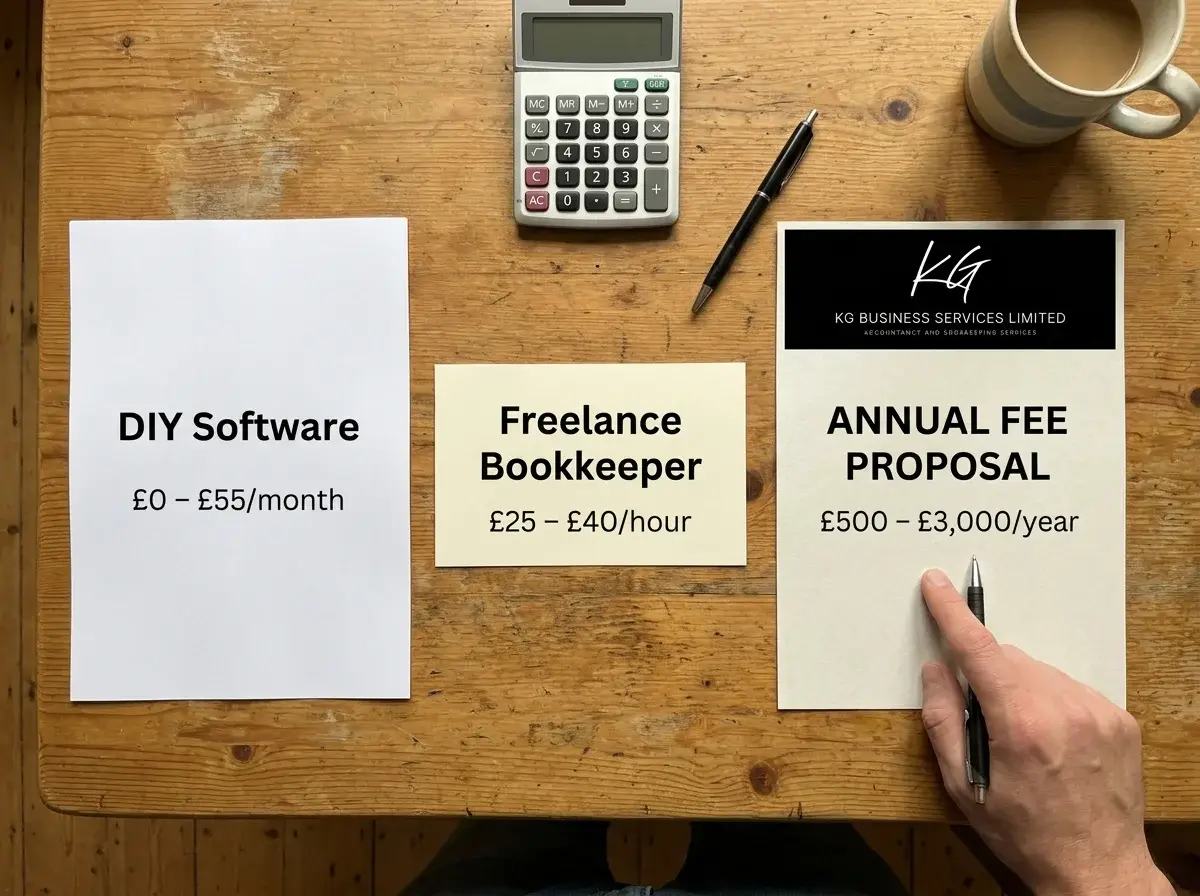
Your bookkeeping costs depend on how you handle the work and how complex your business is. There are three main options to weigh up.
DIY with software
If you do your own bookkeeping, you’ll mainly pay for software. Prices range from £0 for basic tools to about £55 a month for full platforms like Xero or QuickBooks.
This works well for sole traders with low transaction volumes and simple finances.
Freelance bookkeeper
A freelance bookkeeper usually charges £25–£40 an hour. Many small businesses prefer a monthly retainer, which generally costs £150–£400.
Your final price depends on your monthly transactions and whether you’re VAT-registered.
Accountancy firm
Using an accountancy firm costs more, but you get wider support, including tax advice and year-end filing. Annual fees usually fall between £500 and £3,000, depending on your business size and complexity.
| Option | Typical Cost | Best For |
|---|---|---|
| DIY software | £0–£55/month | Simple sole traders |
| Freelance bookkeeper | £25–£40/hour or £150–£400/month | VAT-registered or growing businesses |
| Accountancy firm | £500–£3,000/year | Complex or expanding businesses |
Your actual cost depends on your transaction volume, VAT status, and how much support you want. A lot of business owners start out doing their own bookkeeping, but as things get busier and finances get messier, they move to a freelance bookkeeper or an accountancy firm for extra help.
Frequently Asked Questions
Whether you need a bookkeeper depends on your time, budget, and how comfortable you are with numbers. Here are answers to the questions small business owners ask most about managing their books.
Do I Need a Bookkeeper for My Small Business?
It depends on how much time you have and how complex your finances are. If you’re managing just a handful of invoices each month, you might cope on your own.
But if your business is growing, a small business bookkeeper can save you hours and reduce the risk of mistakes. Bookkeepers also help you stay on top of VAT, payroll, and other HMRC requirements.
This matters more once your turnover increases or you take on staff. Many business owners find the cost of a bookkeeper is worth it because it frees up time to focus on running the business.
If you’re not sure, start by tracking how many hours you spend on bookkeeping each month. If it’s cutting into time you’d rather spend on customers or sales, maybe it’s time to get some help.
Can I do my own bookkeeping for a small business in the UK?
Yes, you can do your own bookkeeping, and plenty of sole traders and small limited companies do. Basic bookkeeping for small business owners usually means recording sales, tracking expenses, and keeping receipts organised.
You’ll need to know a few key rules. For example, HMRC expects you to keep financial records for at least five years after the submission deadline of the relevant tax year.
You’ll also need to register for VAT if your turnover goes above the threshold and follow Making Tax Digital rules if they apply to you. Doing your own books works best if your business has simple finances and few transactions.
As things get more complicated, like managing payroll or multiple income streams, it gets harder to stay accurate without support.
How can I create a bookkeeping spreadsheet in Excel?
Excel is a common tool for small business bookkeeping, especially for sole traders and very small companies. Start with separate columns for the date, description, amount, and category of each transaction.
Create two main sheets: one for income and one for expenses. Add a summary sheet that pulls totals from both, so you can see your profit or loss at a glance.
Use formulas like SUM to add up totals automatically, and update the spreadsheet regularly to avoid a backlog. Lots of free templates are available online if you don’t want to build one from scratch.
Just remember, spreadsheets don’t file VAT returns automatically. If you’re VAT-registered, you may need compatible software to meet Making Tax Digital requirements.
How Often Should I Update My Books?
Try to update your books at least once a week. That way, you’ll keep your records accurate and avoid letting small mistakes snowball into bigger headaches.
Weekly updates help you catch cash flow issues before they get out of hand. If you only check your books at the end of the month or year, it’s way too easy to lose receipts or forget what happened with a transaction.
If your business juggles a tonne of sales or expenses, you might want to update your books daily. Daily updates come in handy for businesses that handle a lot of cash or run sales on several different platforms.