Borrowing money or buying something on credit means you enter into a financial relationship that impacts how you run your business on a day-to-day basis.
This is a reality for anyone from sole traders starting to run established limited companies.
Credit is practically ubiquitous in business, from supplier invoices to bank loans, customer payment terms, and business credit cards.
The way you handle your financial relationships affects how you manage your cash flow, meet your obligations on time, and build your business credit rating.
These scenarios may be common, but many business owners in the UK underestimate the relationships, the power hierarchies within each, and the extent of their legal and financial responsibilities.
Defining Creditors and Debtors: Meaning, Roles, and Examples
In business accounting, creditors are the folks or companies you owe money to. Debtors are the ones who owe money to you.
Most business transactions with credit terms boil down to these two groups.
What Are Debtors?
In accounting, debtors are customers or clients who have received goods or services but haven’t paid yet. You’ll see them on your balance sheet as trade debtors or accounts receivable.
That number shows the total owed to your company at any time. Managing debtors well keeps your cash flow healthy.
If customers drag their feet paying, you might struggle to pay your own bills. That’s not fun for anyone.
Most businesses offer credit terms like “pay in 30 days” to attract customers, so there’s almost always a gap between a sale and actually getting the money.
Examples of Debtors
Think of a customer who orders £2,000 worth of stock from your shop with 30-day terms. Until they pay, they’re your debtor.
A client who receives consulting services in March but pays in April is considered a debtor during that period.
- A restaurant gets fresh produce and pays the supplier weekly.
- A construction company invoices clients after finishing a job.
- A retailer sells goods to another business on credit.
- An employee who got a salary advance.
Basically, anyone who owes money for goods or services they’ve already received falls under the definition of debtor.
What Are Creditors
In accounting, creditors are people/businesses/organisations that you owe money to. On a balance sheet, creditors appear as either trade creditors or accounts payable.
Typical creditors? Suppliers, utility companies, and landlords.
By allowing you to pay at a later date, let creditors to provide you with a type of short-term financing. This gives you time to sell goods before you must pay.
However, this means that you have to manage all of these obligations. If you fail to make a payment, you run the risk of losing a good business relationship or hurting your credit score.
Typical creditors will expect payment in 30 or 60 days and will charge interest if you pay late.
Creditors’ Examples
Creditors in your business might be your office supply company if you buy stationery on account. Your electricity provider is a creditor between billing and payment.
A bank that loans your business money is also a creditor.
- Trade creditors: Suppliers letting you pay later.
- Utility creditors: Companies that send you bills for gas, electricity, water, or internet.
- Loan creditors: Banks or financial institutions lending money.
- Tax creditors: HMRC for things like VAT, corporation tax, or PAYE.
- Landlords: Waiting on rent payments.
| Aspect | Creditor | Debtor |
|---|---|---|
| Definition | A person or organisation that is owed money by another party | A person or organisation that owes money to another party |
| Role in transaction | The lender or supplier who provides goods, services, or funds on credit | The borrower or buyer who receives goods, services, or funds on credit |
| Position on the balance sheet | Appears as a current liability — money the business owes to others | Appears as a current asset: money owed to the business by others |
| Cash flow impact | Money will flow out of the business when the creditor is paid | Money will flow into the business once the debtor pays |
| Common examples | Suppliers, banks, HMRC, landlords, lenders | Customers, clients, borrowers, tenants |
| Legal right | Has the legal right to demand repayment and pursue legal action if unpaid | Has a legal obligation to repay what is owed within agreed terms |
| Risk involved | Risk of non-payment or bad debt if the debtor defaults | Risk of penalties, interest charges, or legal action if payment is missed |
| Key metric | Creditor days: measure how long the business takes to pay suppliers | Debtor days: measure how long customers take to pay the business |
| Interest/charges | May charge interest or late fees if payment is delayed beyond the agreed terms | May incur interest or penalty charges if repayment is delayed |
| Accounting treatment | Recorded under accounts payable or trade creditors in the ledger | Recorded under accounts receivable or trade debtors in the ledger |
| Goal for the business | Pay within agreed terms to maintain good supplier relationships | Collect payment as quickly as possible to maintain a healthy cash flow |
| Can a business be both? | Yes, a business can be a creditor to its customers and a debtor to its suppliers at the same time | |
Key Differences Between Creditors and Debtors in Accounting and Business
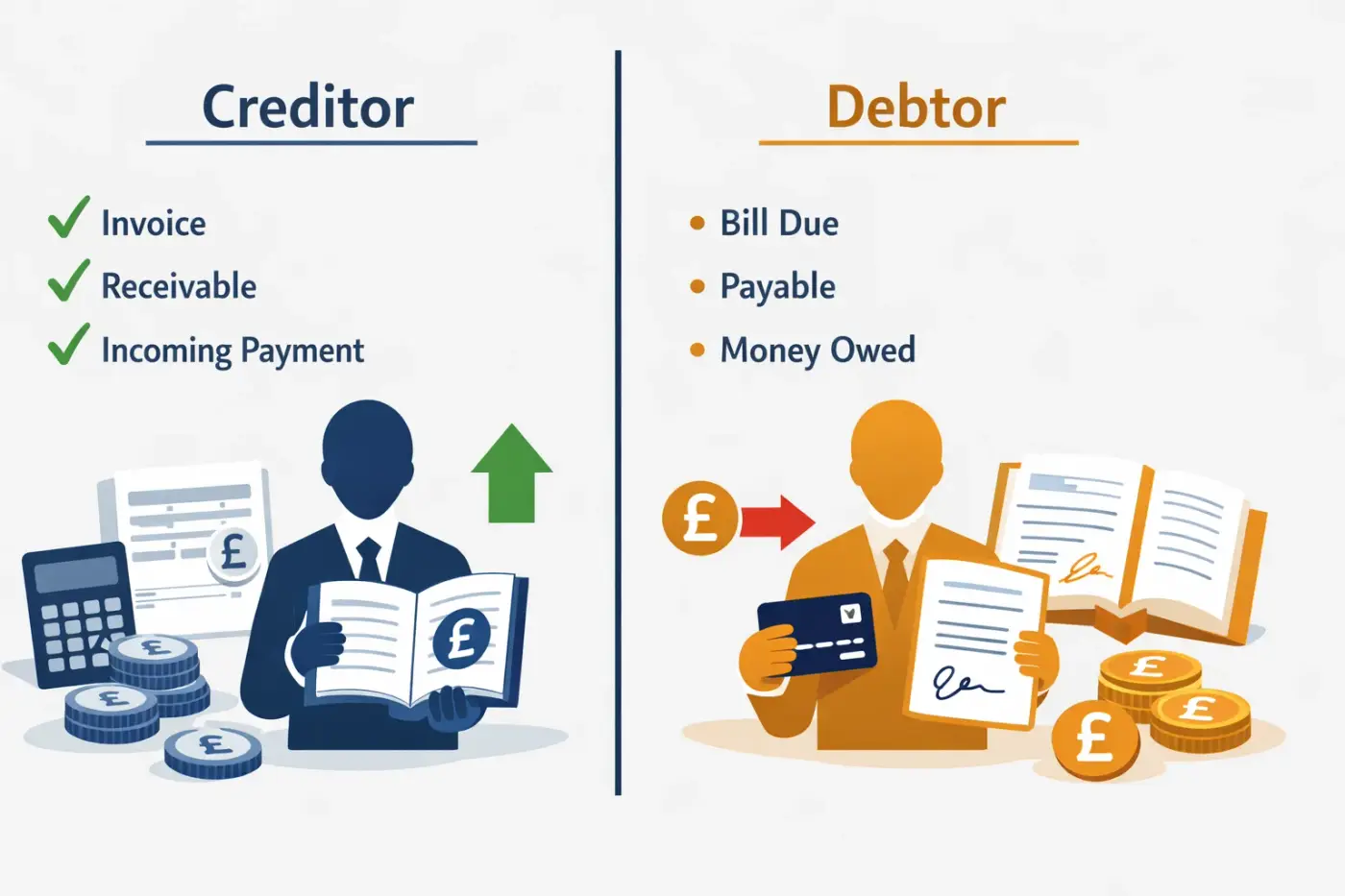
(For Illustrative Purposes Only)
Creditors and Debtors on the Balance Sheet
In modern bookkeeping software like Xero or QuickBooks, you will often see these listed under the American terms ‘Accounts Receivable’ (Debtors) and ‘Accounts Payable’ (Creditors).
However, on your official UK statutory accounts filed with Companies House, they will always appear as ‘Trade Debtors’ and ‘Trade Creditors’.
Trade debtors are classed as a current asset. That’s money you expect to receive once customers pay their invoices.
Trade creditors are a current liability. That’s money you owe to others and will have to pay out soon.
Assets are things your business owns or expects to receive. Liabilities are obligations you need to settle. It all comes down to what flows in and what flows out.
What Are Sundry Creditors?
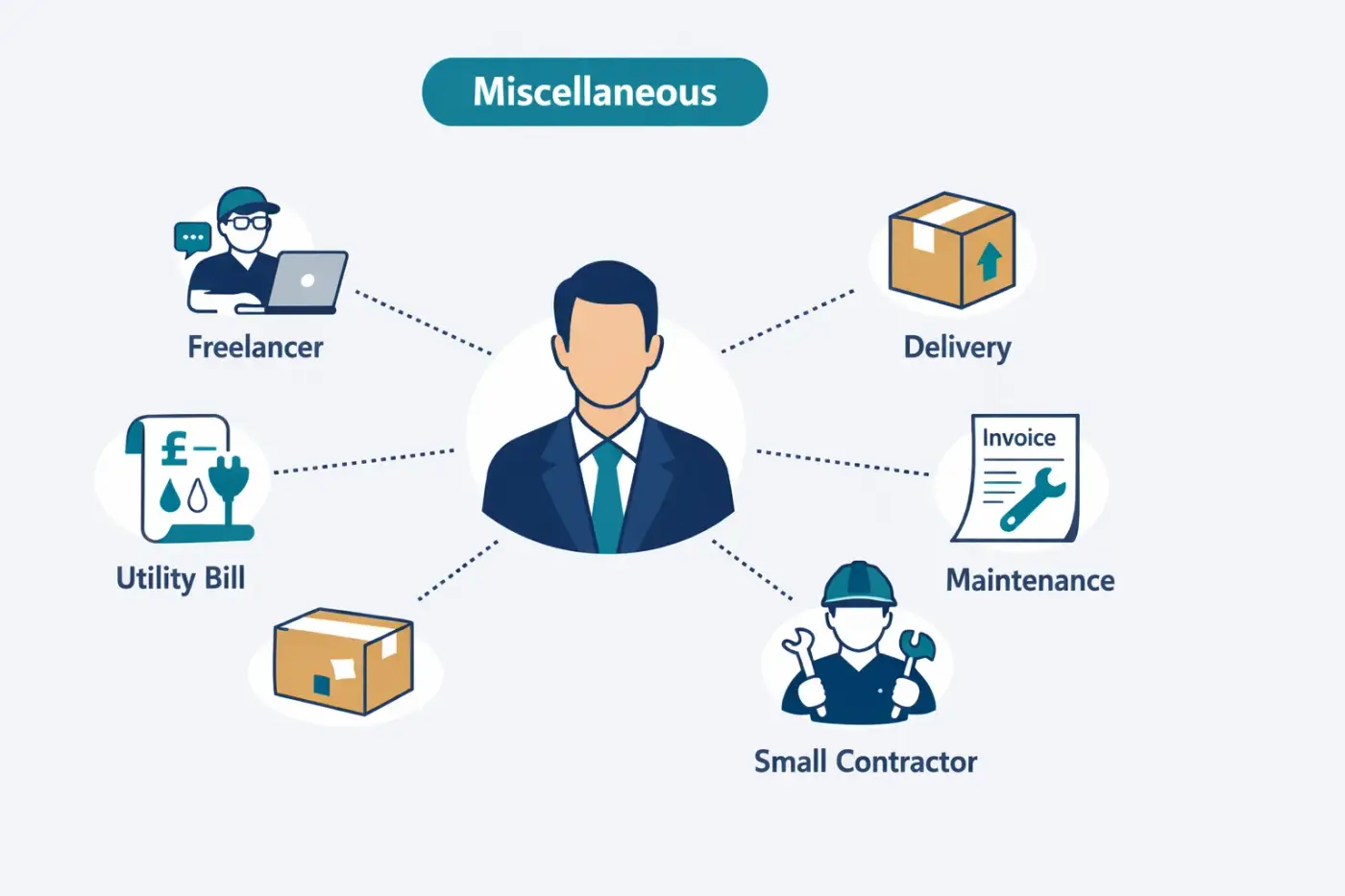
(For Illustrative Purposes Only)
Sundry creditors are people or businesses to whom your company owes money, but this is done on an irregular or infrequent basis. They are not your principal vendors or frequent creditors; these are people or companies you work with from time to time, and the sums involved are less or less often than your typical accounts payable.
Some common examples of sundry creditors in a UK business context include:
- A freelancer or contractor you hired once for a specific project
- A utility company you owe a small outstanding balance to
- A landlord for a one-off maintenance recharge
- A government body for a minor penalty or fee
What Are Sundry Debtors?
On the flip side, sundry debtors are individuals or entities that owe your business money, again on an irregular or minor scale.
These are not your primary customers or main sources of revenue; they are people your business has dealt with occasionally, where a small amount of money is still outstanding.
Examples of sundry debtors might include:
- An employee who received a salary advance and hasn’t yet repaid it
- A business you sold an old piece of equipment to on deferred payment
- A tenant or subtenant who owes a small outstanding rent amount
- A customer who made a one-off purchase and hasn’t yet settled the invoice
| Trade | Sundry | |
|---|---|---|
| Nature | Regular, core business | Irregular, miscellaneous |
| Amount | Often larger | Usually smaller |
| Frequency | Ongoing | One-off or infrequent |
| Example (Creditor) | Main supplier invoice | Freelancer payment |
| Example (Debtor) | Monthly customer invoice | Employee salary advance |
What Does “Sundry” Actually Mean?
“Sundry” simply means “various” or “miscellaneous”; it refers to items that are too small, too irregular, or too varied to justify their own individual category in your accounts. Think of it as a catch-all label for minor financial dealings that don’t fit neatly elsewhere.
Main Differences: Legal, Financial, and Practical
It’s about more than just definitions. From a legal standpoint, creditors can track you down, and if you fail to pay, they can take legal action against you.
As a debtor, you are legally obligated to pay up as per the contract you signed. As a creditor, you have the legal right to pursue collections and even contract a collection agency if you choose.
From a financial perspective, debtors are future revenues that you have not yet received. When there are high levels of debtors, you can become cash poor, even if your financial statements look solid.
On the contrary, creditors represent upcoming obligations that you are going to have to pay, and having too many creditors and not enough cash can create a problem.
Your credit score improves when you pay your creditors on time. It hurts your score when there is a lot of debt, and you pay late. It’s really a matter of finding the right balance.
Creditors’ and Debtors’ Impact on Cash Flow
Cash flow is all about real money moving in and out—not just promises on paper. A business might look profitable but still run out of cash if they don’t manage this well.
When debtors pay late, your cash flow takes a hit, even if your balance sheet says you’re owed money. You can’t pay staff or suppliers with unpaid invoices.
Plenty of small businesses end up using personal funds to fill the gap when debtors drag their feet.
Paying creditors affects your outgoing cash. If you stretch out payment terms with suppliers, you get more time, which can help temporarily.
But take it too far, and you risk souring relationships or racking up late fees. It’s always a bit of a dance.
Ideally, you want to collect from debtors before you pay your creditors. That’s how you keep cash flowing and the lights on.
Measurement Tools: Creditor Days and Ratios
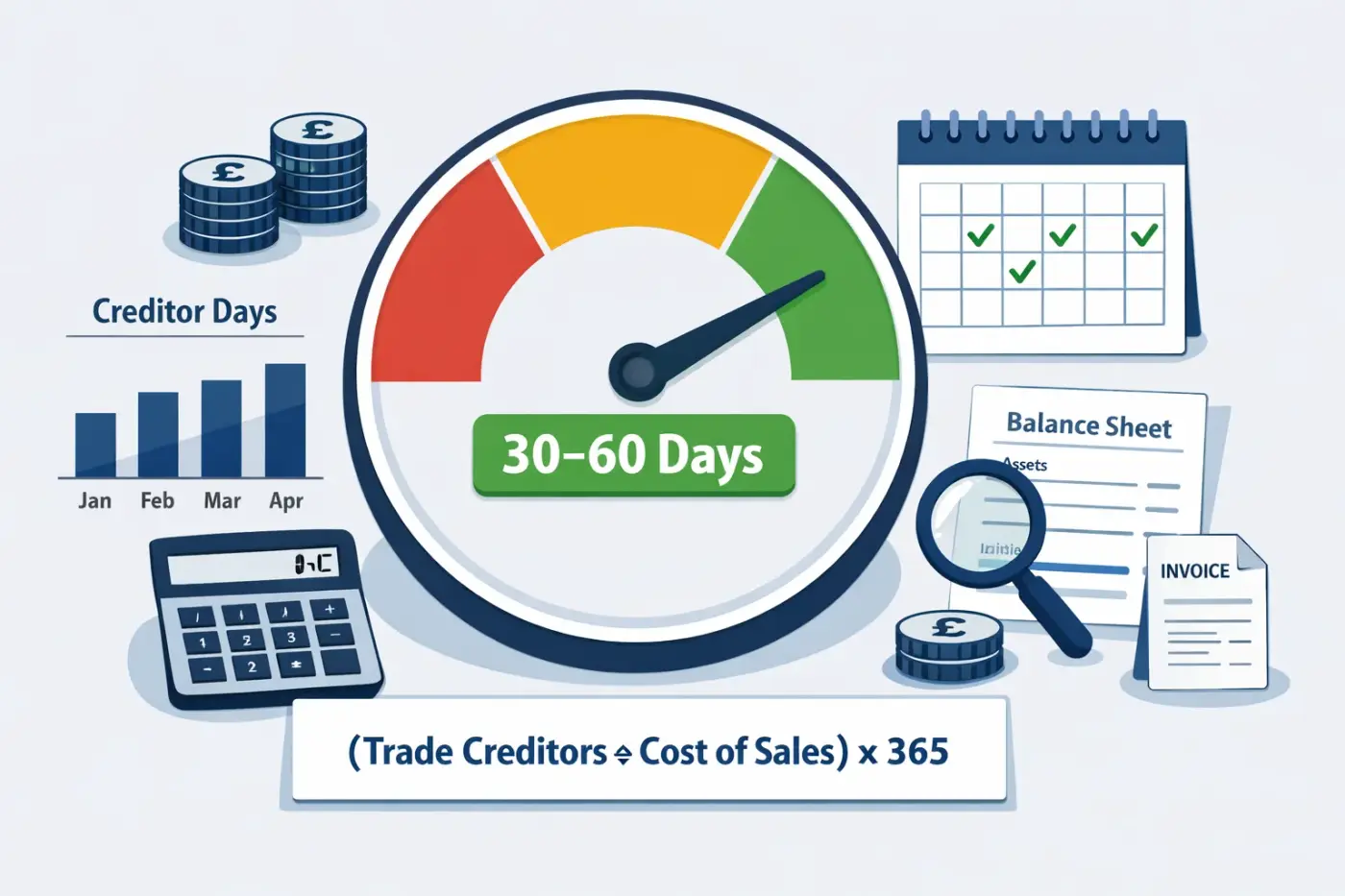
(For Illustrative Purposes Only)
Creditor days is a practical metric that tells you, on average, how long your business takes to pay its suppliers. It gives you a clear picture of how well you’re managing your outgoing payments and whether your payment habits are working in your favour or quietly causing problems.
The formula is straightforward:
(Trade Creditors ÷ Cost of Sales) × 365
Breaking Down the Formula
Trade Creditors is the total amount you currently owe to your suppliers; this figure sits on your balance sheet under current liabilities.
A Practical Example
Let’s say your business has £50,000 in trade creditors and your annual cost of sales is £500,000. Here’s how the calculation works:
(£50,000 ÷ £500,000) × 365 = 36.5 days
This means, on average, you’re paying your suppliers every 36.5 days. That sits comfortably within the widely accepted benchmark of 30 to 60 days, which most UK businesses aim for. However, what’s considered healthy can vary depending on your industry.
Frequently Asked Questions
How are debtors and creditors shown on the balance sheet?
Debtors go under assets. They’re the money owed to the business that you expect to come in.
Creditors are listed under liabilities. That’s money you owe and will need to pay out.
This setup reflects which way the cash flows: debtors bring it in, creditors take it out.
In accounting, how do debtors and creditors affect the ledger entries?
When you invoice a customer, you add a debit entry to accounts receivable. That bumps up your debtors, money owed to you.
Get a bill from a supplier? You add a credit entry to accounts payable, increasing your creditors.
Is a customer classed as a debtor or a creditor in typical transactions?
A customer is a debtor because they received a product or service but have yet to make a payment.
As soon as you issue an invoice to them, they become debtors to you. Once payment is made, they are no longer a debtor to you for that transaction.
Is a supplier recorded as a debtor or a creditor, and when does it change?
Your supplier is a creditor. That is, you have received goods or services, but the payment for them is still outstanding.
Your supplier remains a creditor until you make the payment. Once you do, the transaction is closed.
If you have made a return and the supplier is liable to make a refund to you, they temporarily become a debtor to you. That is a bit of role reversal.
When you owe money, who are you paying back: a debtor or a creditor?
You pay back a creditor. The creditor gave you goods, services, or money, and now it’s your turn to repay them.
In this setup, you’re the debtor because you owe the money. Once you pay, you clear your debt, and the creditor disappears from your list of liabilities.
This holds if you borrowed cash from a bank. The same goes if a vendor delivered supplies or a contractor sent you an invoice for their work.